


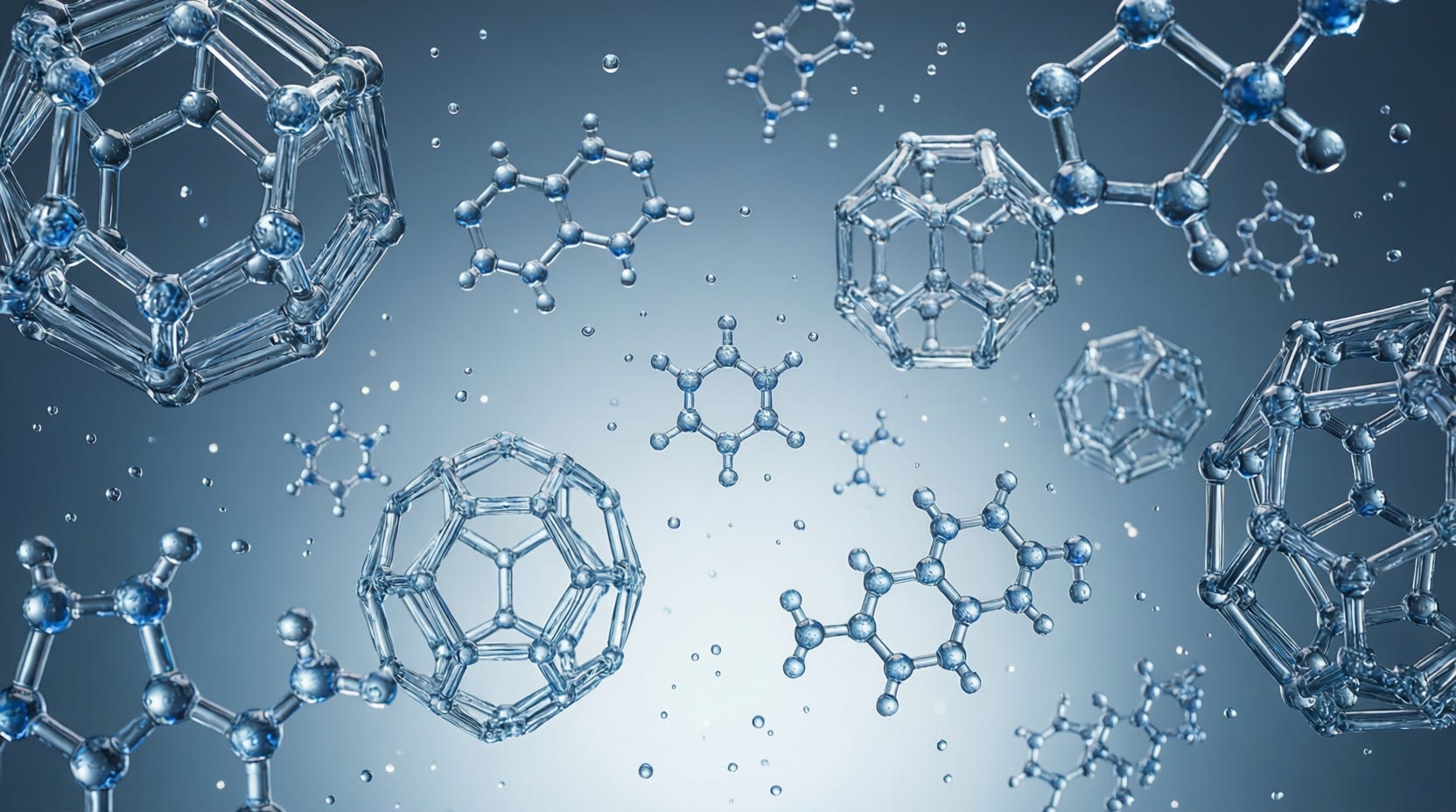
"I find it very exciting that water is the only supercritical liquid at ambient conditions where life exists, and we also know there is no life without water. Is this a pure coincidence, or is there some essential knowledge for us to gain in the future?" — Fivos Perakis, , Chemical Physics, Stockholm University, 2026
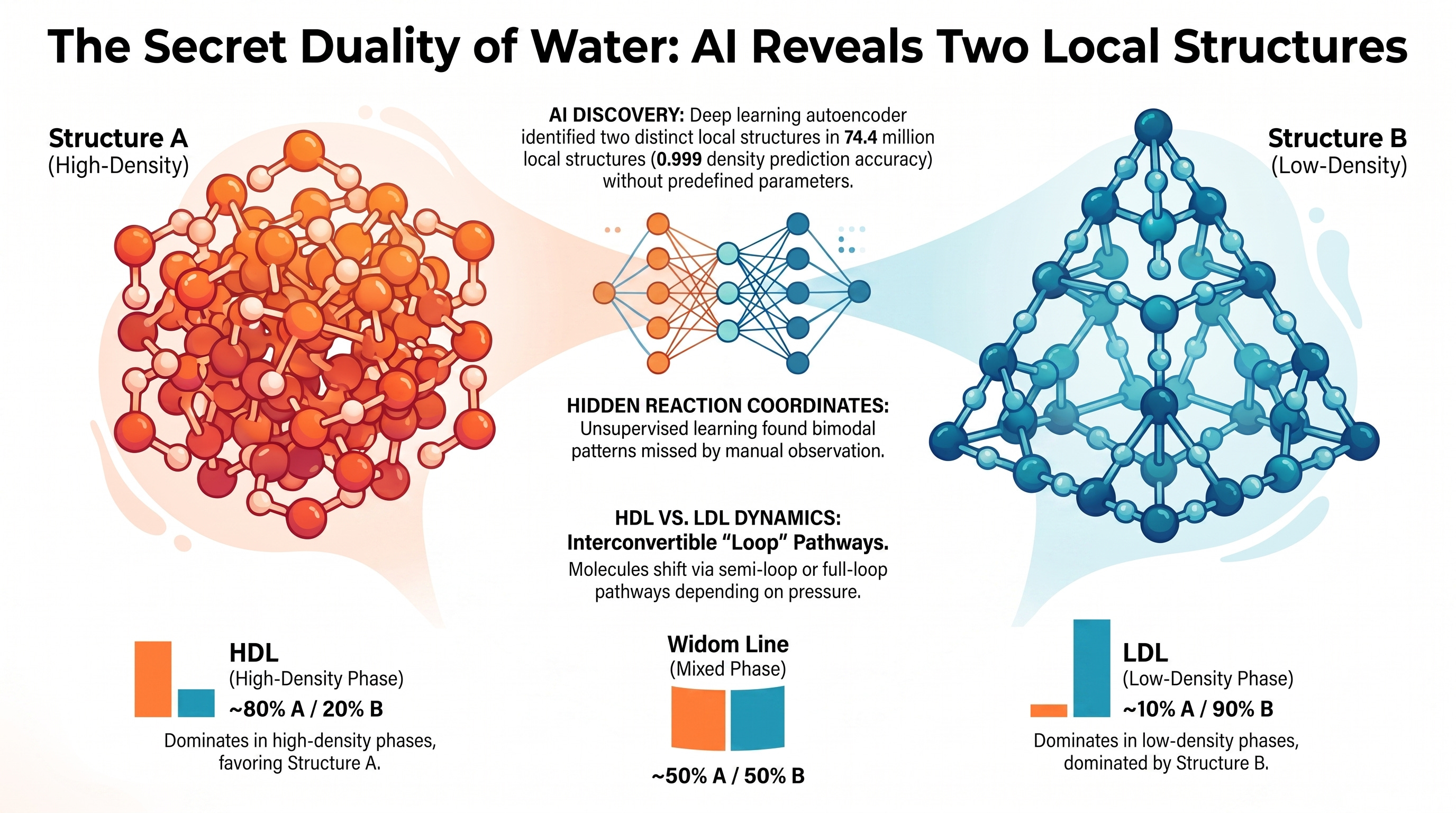
A paper published in Nature Physics this month has just made mainstream news with a claim that sounds impossible: the water in your glass is not one liquid. It is two, constantly switching between them.
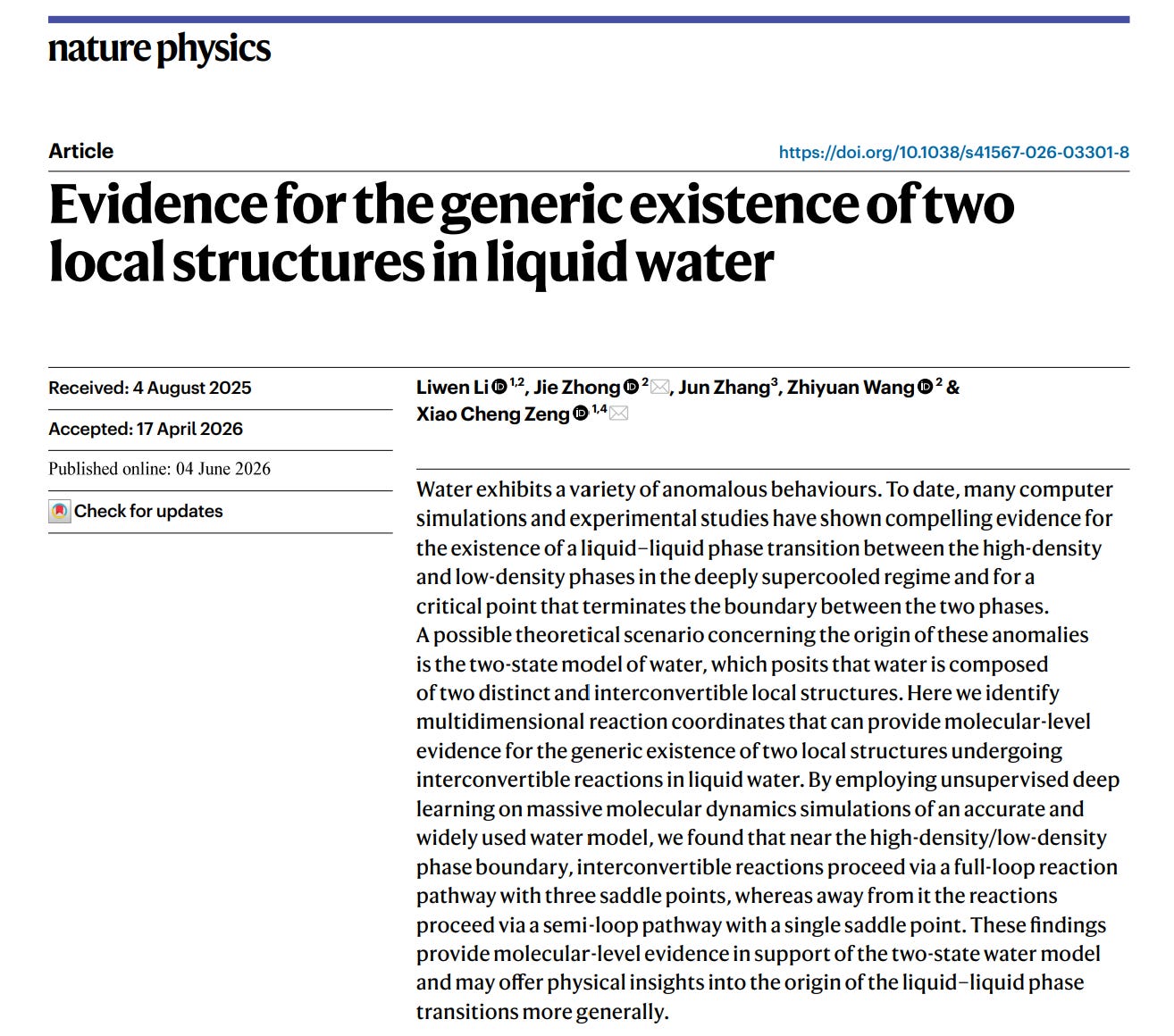
Using artificial intelligence trained on tens of millions of simulated water molecule interactions, researchers at the City University of Hong Kong caught water doing something no instrument had captured before at the molecular level: flickering between a denser, more chaotic arrangement and a lighter, more ordered one. Not occasionally. Constantly. In ordinary water, at ordinary pressure, all the time.
“It’s hard to imagine — here is just one water, right?” said lead researcher Xiao Cheng Zeng, holding up a water bottle as he spoke to journalists. That puzzlement, from a scientist who has spent thirty years studying water, tells you something. The more carefully anyone looks at water, the stranger it becomes.
Why water has always been the anomaly
Water should not behave the way it does. Every other liquid becomes denser as it cools and densest when it freezes. Water reaches its maximum density at 4°C and then expands as it freezes, which is why ice floats. If it did not, every lake and ocean on Earth would freeze solid from the bottom up, and life as we know it would be impossible.
Water also has a specific heat far higher than it should, a surface tension far higher than it should, a viscosity that decreases under pressure rather than increasing. Every one of these anomalies has been documented for over a century. None of them have had a satisfying unified explanation. Scientists have catalogued them the way you might catalogue the habits of someone you live with but do not really know.
Consider the most basic question of all, one that almost nobody thinks to ask: why is water a liquid at room temperature? Based on the behaviour of similar molecules in the periodic table, water should boil at around -80°C. It should be a gas. The standard answer is hydrogen bonds, the weak electrical attractions between water molecules that hold them together in a network. But hydrogen bonds in liquid water break and reform approximately five trillion times per second. At any given instant, the bond holding a particular molecule in the network is gone. The molecule is momentarily free. So why does it not escape into the air? Individual hydrogen bonds cannot be what keeps water liquid. Something is operating at a larger scale, a collective organizational principle that persists even when the individual bonds have vanished. Finding out what that principle is happens to be exactly what the two-state research is circling.
The two-state model is the first theory capable of explaining all of these anomalies from a single cause. If water is always fluctuating between a denser and a lighter structural form, then its unusual density maximum, its high heat capacity, its strange viscosity behaviour all follow naturally from that internal tension. The new paper provides the most direct molecular-level evidence yet that this is actually what is happening.

Lehrs said this in 1951
Ernst Lehrs was a German natural philosopher working in the tradition of Goethe. His 1951 book Man or Matter contains a description of water that reads, seventy-five years later, like a prediction of exactly what this research has found.
Lehrs described water as the living expression of two opposing cosmic principles held in dynamic tension. He called them gravity and levity. Gravity is the tendency to contract, to densify, to consolidate toward a point, the principle that produces solids, crystals, ice. Levity is the opposite: the tendency to expand, to open, to radiate outward, the principle that produces gases, vapors, living forms. Ice is gravity winning. Steam is levity winning. Liquid water, Lehrs argued, is what happens when neither wins: a perpetual living tension between the two, held in the middle, refusing to resolve into either.
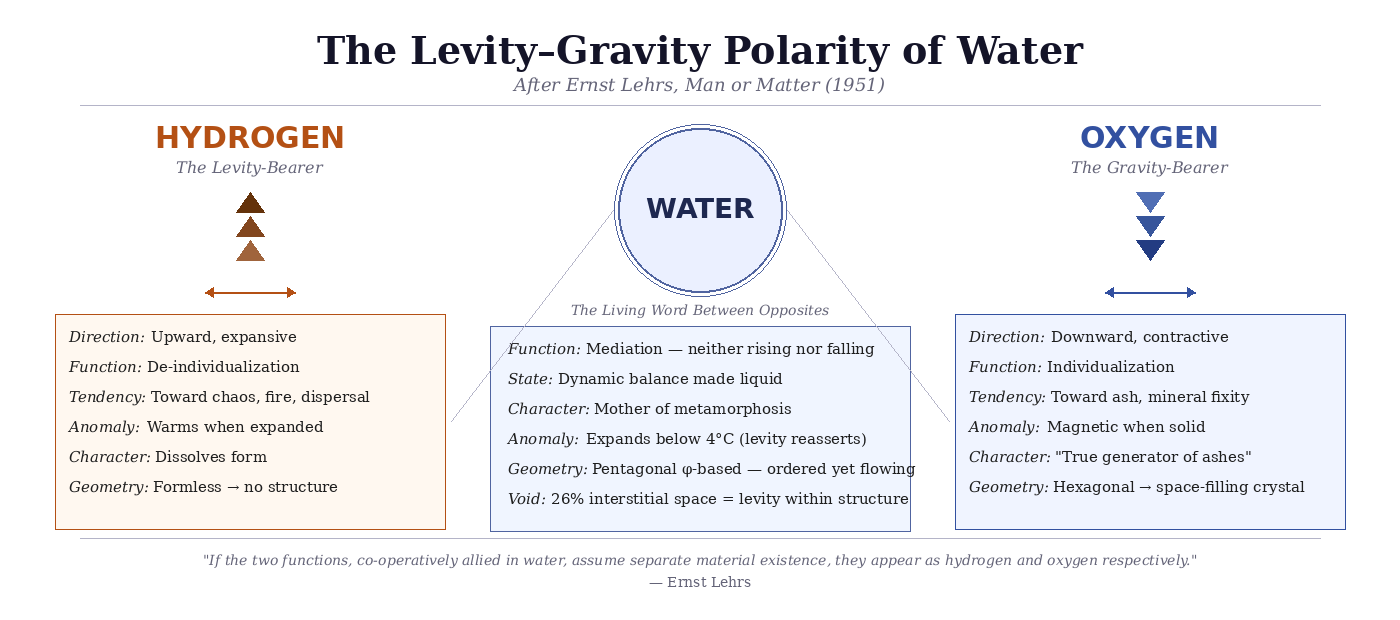
What the new physics describes as a high-density liquid fluctuating against a low-density liquid is, in Lehrs’ language, gravity and levity in their perpetual contest. The denser, more chaotic form is the gravity tendency becoming locally dominant. The lighter, more ordered form is levity asserting itself. And at the temperatures where life operates, well above the point at which the two forms would separate into distinct phases, both are present simultaneously, neither dominant, both active.
Lehrs did not have access to femtosecond x-ray lasers or AI-driven molecular dynamics simulations. He had Goethe’s method: sustained, disciplined attention to phenomena themselves, following what the phenomena reveal rather than imposing a pre-existing framework onto them. He arrived at the same conclusion by a different road.
The geometry underneath
What the new research does not yet address is what the two structural forms actually look like at the molecular level, what geometry each one expresses. That question has been pursued separately by Martin Chaplin at London South Bank University, whose peer-reviewed work on water cluster architecture proposes that the lighter, more ordered form of liquid water organises itself into icosahedral structures: twenty-sided forms built from pentagonal rings, governed throughout by the golden ratio φ (phi, 1.618…). These are the same proportions that appear in living forms throughout nature — in shells, in plant growth, in the proportions of the human body.
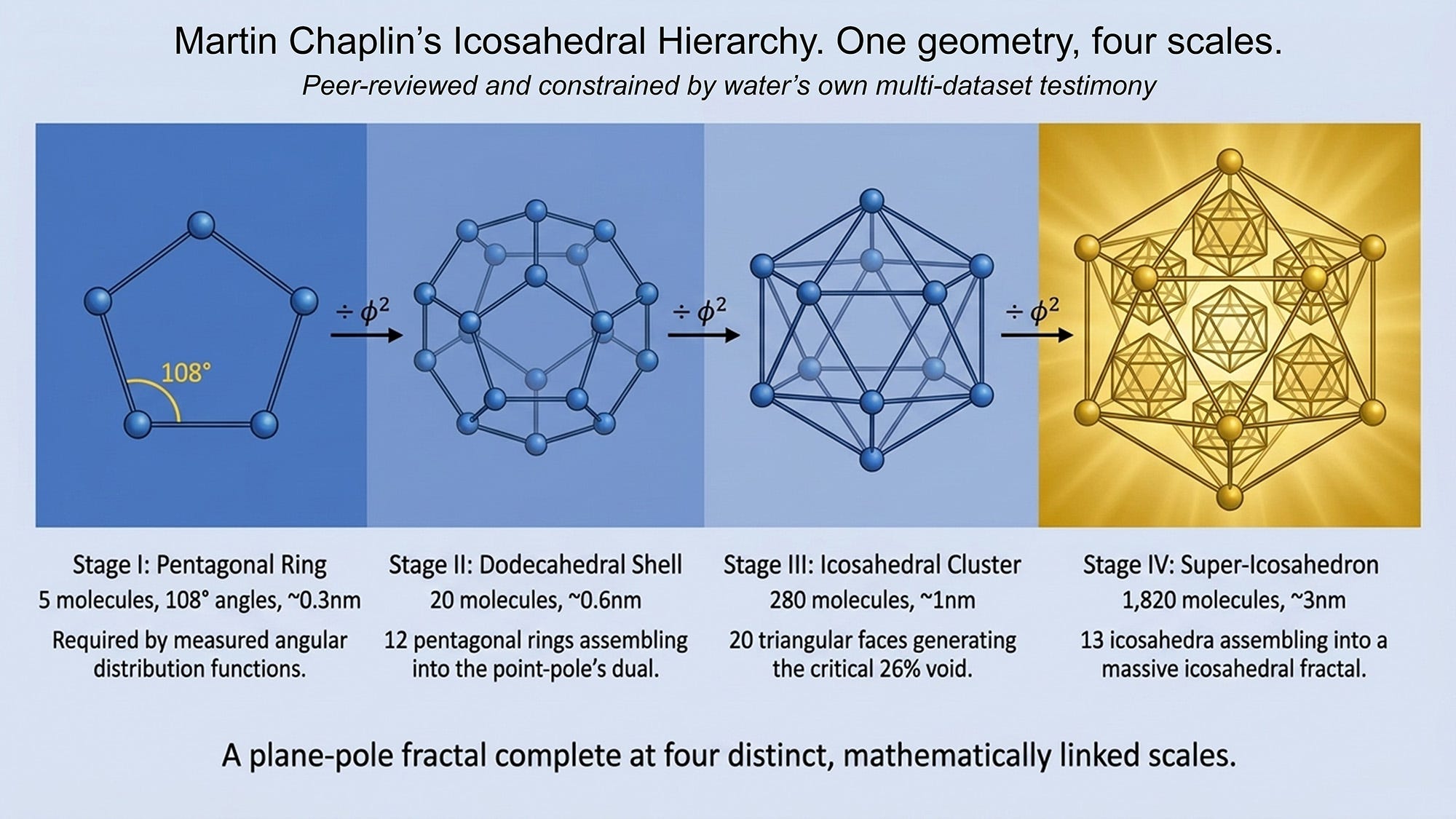
Plato assigned the icosahedron to water in the Timaeus 2,300 years ago. He was not guessing. He understood, through the mathematics of form available to him, that water’s essential character was expressed in that particular geometry: open, non-space-filling, always generating structured void, always resisting final closure. Modern molecular research has arrived at the same form by a completely different route.
The heavier, denser, more chaotic form tends in the opposite direction: toward collapse, toward higher packing, toward the point-pole geometry that eventually crystallizes as ice. The two structural forms the AI has just caught switching in real time are, geometrically speaking, two different spatial languages: one the language of life, one the language of the mineral world.
What shifts the balance?
This is the question mainstream science has not yet answered, and the one that matters most practically. If water is always fluctuating between two structural tendencies, what determines how much time it spends in each? What pushes it toward the ordered, open, life-sustaining form, and what collapses it toward the dense, chaotic one?
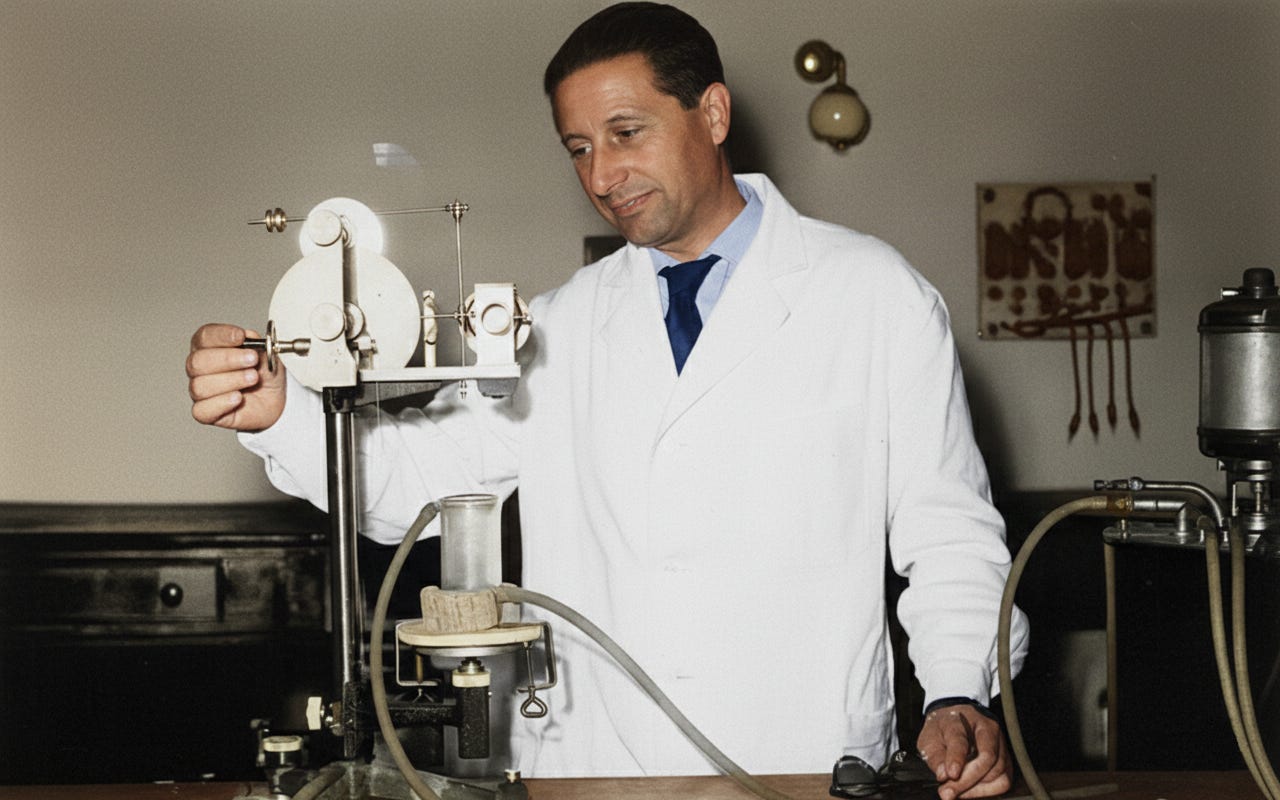
Giorgio Piccardi, an Italian chemist who ran continuous chemical tests on water for over thirty years from his laboratory in Florence, found that water’s reactivity fluctuates with solar activity, geomagnetic conditions, and what he described as influences that pass through copper electromagnetic shielding unimpeded. His conclusion was that water is exquisitely sensitive to conditions that conventional chemistry does not register, that the medium we think of as inert background is in fact a dynamic receiver, constantly responding to its environment.
Theodor Schwenk, the German hydrologist and author of Sensitive Chaos, documented water’s extraordinary sensitivity to form, to movement, to the geometry of the surfaces it flows across. Lilly Kolisko demonstrated through decades of capillary dynamolysis experiments that water carries and expresses influences that defy purely chemical explanation. These researchers were all, in different ways, measuring the same thing: the degree to which water’s structural balance is responsive to its world.
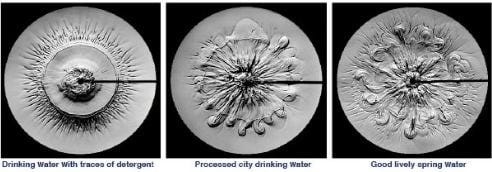
The two-state model now gives all of this a structural mechanism. Water is sensitive because it is always poised between two forms. Its sensitivity is not a bug or an anomaly. It is the direct consequence of that perpetual living tension Lehrs described.
Why this matters now
The researcher whose quote opens this post, Fivos Perakis of Stockholm University, ended his contribution to this work with a genuine open question: water is the only liquid that exists in a supercritical state at the conditions where life operates, and we do not know whether that is coincidence or the key to understanding life itself.
That question has an answer. Not a speculative one — a detailed, evidence-grounded answer drawing on molecular biology, quantum field theory, projective geometry, and sixty years of geocosmic sensitivity research. The convergence of these independent lines of inquiry into a single coherent framework is, in itself, the discovery worth paying attention to.
Go deeper
The research covered in this post raises a question mainstream science has not yet answered: if water fluctuates between two structural poles, what shifts the balance?
The Sacred Geometry of Water is a four-hour masterclass that follows the evidence toward a complete answer. Starting from the molecular architecture Chaplin mapped and the coherent domain theory Del Giudice established, it builds through the geocosmic sensitivity research of Piccardi, Schwenk, and Lilly Kolisko, and Adams' projective geometry, into a unified picture of what water actually is. From there it goes further: into Viktor Schauberger's lifetime of observation of water in motion, Trevor James Constable's documented atmospheric work with phi-scaled geometric instruments, and Veda Austin's freeze crystallography — which raises the most unsettling question of all: does water respond to consciousness? The convergence of these independent lines of evidence into a single coherent framework is, in itself, the discovery. We are 99.9% water, we are sacred geometry, the relationship is clear.
water.alkemix.art

Oh, this was such a joy to read. Thank you.
Both as a physicist and as a yoga teacher, I follow this truly life-filled, forward-looking synthesis of science with great curiosity and attention.
Thank you.
Super interesting!