



“Comprehend and copy Nature.” —Viktor Schauberger
Overview
Agriculture consumes approximately 75% of global freshwater resources. Against the dual pressures of population growth and increasing aridity, the efficiency with which that water delivers biological benefit becomes a matter of civilizational consequence. A growing body of experimental evidence demonstrates that water subjected to vortex treatment, geometric structuring, or specific field exposures produces measurable improvements in germination rates, plant biomass, and crop yield — in many trials, at equivalent or reduced water volume.
The standard question put to these findings is: how? What actually changes in the water, and how does that change translate into plant response? Herein I address that question from the level of molecular biophysics upward, drawing on established research in water structure, aquaporin physiology, and the electromagnetic coherence of living cells. The framework I apply belongs to what I call the Sacred Geometry of Water: the recognition that liquid water carries an intrinsic φ-based icosahedral geometry that is the molecular basis of biological coherence.
The question carries particular weight wherever water is scarce and harvests must grow. My own interest here is practical as well as philosophical. The bioarchitect Juan Schlosser and I worked out the flow geometry of the BioVortexer from Viktor Schauberger’s studies of how living streams move, and the instrument now stands ready to be placed in irrigation lines. The sections that follow trace the path from the vortex in the pipe to the water in the cell, name the researchers and data at each step, and mark clearly which links are established and which await measurement. We can see from this map exactly where the next experiment belongs.
I. The Cell Interior Is Already a Structured Water Environment
The first and most important point of departure: plant cells do not contain bulk water. The water inside a living cell is extensively organized against protein surfaces, membrane interfaces, cytoskeletal fibers, and organelles. It is not the statistical liquid of a glass of water. It is a dynamically coherent medium shaped by the biological architecture it inhabits.
This is confirmed at the vascular level by a 2024 study in Scientific Reports demonstrating the presence of exclusion zone (EZ) water both inside plant xylem vessels and on their external surfaces. The xylem wall is lined with hydrophilic surfaces that generate a charge-separated, proton-extruded zone of coherently organized water. This EZ layer functions as an electrokinetic engine driving upward sap flow — the plant does not merely pull water up by transpiration deficit, it sustains a structured water architecture that actively powers vascular transport.
The study deserves precise description. Anqi Wang and Gerald Pollack examined isolated xylem vessels from four vegetables (cabbage, celery, asparagus and pumpkin), suspended fluorescent microspheres in the surrounding water, and watched the spheres withdraw from the vessel walls. Exclusion zones of 133 to 142 micrometers formed in cabbage, celery and asparagus; pumpkin vessels built zones up to 240 micrometers wide, growing inward from the wall toward the center of the vessel over time. The authors write that “EZ generation inside xylem vessels is associated with water flow, likely driven by a proton gradient,” and they offer it as an interfacial mechanism complementing the classical cohesion–tension account, with its full physiological role in the living plant yet to be mapped.
Here, then, is a charge-separated, electrically active water layer, hundreds of molecular diameters thick, standing along the walls of the plant’s own plumbing. The vascular system of the plant is, in the most literal sense, a bundle of charged hydrophilic tubes that organize the water passing through them. (Botany textbooks describe mature xylem vessels as dead tissue, which makes their electrical liveliness all the more instructive.)
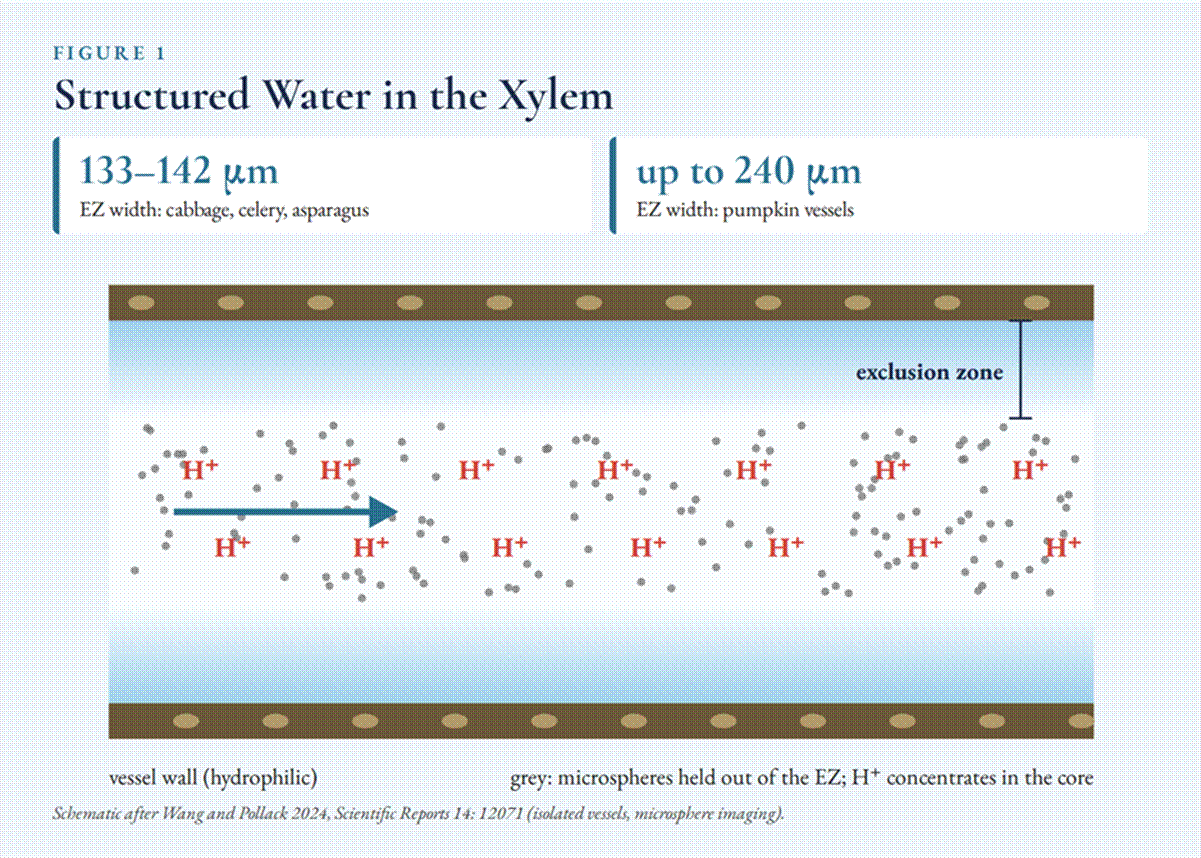
Figure 1. Exclusion-zone water along the walls of plant xylem vessels, after Wang and Pollack (2024).
The consequence is fundamental: structured water entering the root system encounters a biological system already oriented toward maintaining exactly that kind of organization. The plant is not a passive recipient — it is itself a structured water instrument. The question then becomes one of energetic compatibility: how much metabolic work does the plant perform to bring incoming irrigation water into coherence with its own water architecture?
II. The Energetic Cost of Structuring — and What Happens When It Falls
The quantum electrodynamic framework developed by Emilio Del Giudice provides the operative mechanism. Coherent domains — approximately 100 nm regions of phase-locked molecular oscillation organized by a self-trapped electromagnetic field — form spontaneously in liquid water, but their formation and maintenance requires the system to perform electromagnetic work. The cell, in other words, expends energy maintaining the coherent water medium that its biochemistry requires.
When incoming irrigation water carries an existing degree of coherent domain organization, that work is reduced. The cell’s ordering processes encounter water that is already partially aligned with the φ-based geometry the cell’s own medium sustains. The coherent domains are reinforced rather than disrupted. The metabolic energy previously spent reorganizing bulk water at the membrane and intracellular interface becomes available for biosynthesis, cell division, and tissue expansion.
Mae-Wan Ho, reviewing the Del Giudice program in Entropy in 2014, drew out its most striking consequence for living systems. Within each coherent domain the water molecules oscillate between the ground state and an excited state close to the ionization potential of water, producing, in her words, “a plasma of almost free electrons favouring redox reactions, the basis of energy metabolism in living organisms.” Ho further proposed that coherent domains stabilized at membrane surfaces supply excited interfacial water that splits with less energy, easing the first step of photosynthesis.
Thinking along these lines, the question of irrigation water becomes a question of electrical supply. A crop is a vast array of photosynthetic membranes bathed in water, and the readiness with which that water yields its electrons governs the rate at which light becomes sugar. My extension of Ho’s argument, offered as a hypothesis for measurement, is that water arriving already coherent brings its plasma of quasi-free electrons with it into the leaf.
The energetic account is the most parsimonious cellular explanation for observed yield increases: the plant grows more because it is spending less energy on the physics of water management. The improvement is not a stimulation — it is the removal of an inefficiency.
III. Aquaporins: The Molecular Gateway
Water crosses biological membranes through aquaporin proteins — channel proteins with an inner diameter of approximately 3 Ångströms, comparable to the diameter of a water molecule. Their conductance is therefore sensitive to the physical state of the water they pass: its clustering, hydrogen-bond network geometry, and surface tension.
Structured water from vortex treatment or geometric field exposure consistently shows altered hydrogen bond network characteristics, measurable by Raman spectroscopy and low-field NMR relaxometry, and reduced surface tension. Higher aquaporin throughput for water in this state is the central proposition awaiting measurement.
A distinction belongs here between what is measured and what is proposed. The dependence of plant growth on aquaporin conductance is firmly established: Christophe Maurel and colleagues gathered the evidence in their 2015 review in Physiological Reviews, tracing aquaporin control of root hydraulics, leaf water relations and cell expansion. The proposal specific to structured water is the step before it, namely that water leaving a vortex or a geometric field enters those channels more readily. That step is the hypothesis at the center of the research program, and the experiment that tests it lies well within the reach of an ordinary plant physiology laboratory.
In plant physiology, aquaporin throughput determines turgor pressure at a given osmotic cost. Cell expansion, which drives every growth metric, from root elongation to leaf area to grain fill, is a turgor-pressure phenomenon. More efficient water delivery at the membrane level directly translates to enhanced growth per liter of water consumed. The plant achieves equivalent or superior turgor at lower volumetric water input.
Several aquaporin subtypes — notably the nodulin-26-like intrinsic proteins (NIPs) — transport not only water but also uncharged small molecules: silicic acid, boric acid, urea, and glycerol. Structured water’s effect on aquaporin conductance therefore simultaneously amplifies nutrient delivery, without requiring increased fertilizer input. Water efficiency and nutrient efficiency move together.
A clarification of the channel families sharpens the picture. Within the plant aquaporins, CO₂ passage belongs chiefly to the plasma-membrane intrinsic proteins (PIPs), while the NIP family carries silicic acid, boric acid and urea. For rice the NIP story carries particular weight. Jian Feng Ma and colleagues identified the rice silicon transporter Lsi1 in 2006 as a NIP-type aquaporin, and rice ranks among the most silicon-hungry plants on Earth, building silica into its leaves and stems as structural armor against drought, pests and lodging. Silicon therefore travels through the same family of gateways as water, and any gain in channel throughput would reach the plant’s structural strength as well as its hydration.
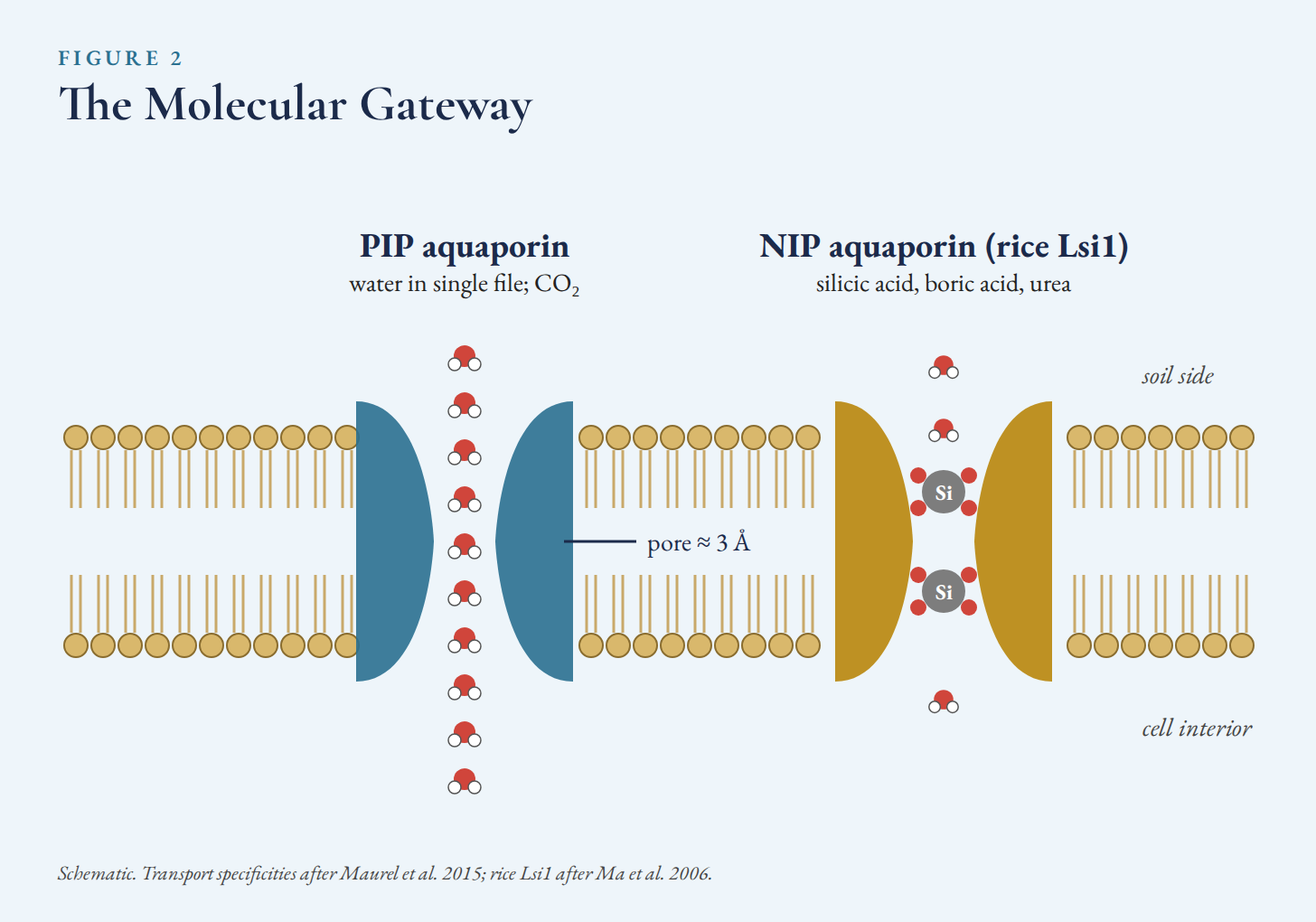
Figure 2. Water and solute passage through plant aquaporins. The rice silicon channel Lsi1 is a NIP-type aquaporin.
IV. Geometric Resonance — Stated in Biophysical Terms
What follows in this section is my own synthesis, joining Chaplin’s molecular geometry and Del Giudice’s field theory to the morphology of living form. Neither thinker drew these connections explicitly; I offer them as a coherent hypothesis grounded in their work.
My thesis on the Sacred Geometry of Water proposes that liquid water carries an intrinsic φ-based icosahedral architecture — Chaplin’s hierarchy of 280-molecule icosahedral clusters, each defined by three mutually perpendicular golden rectangles — and that this geometry is the molecular basis of biological coherence. The plant cell, like all living systems, is architecturally calibrated to interface with pentagonal, φ-based water geometry.
Del Giudice derived that coherent domains are selective absorbers: they resonate with and absorb photons only at their characteristic frequency, driving the domain into a coherent excited state from which chemical work can be extracted. The water medium of the cell is not an inert solvent — it is an active electromagnetic participant in biochemical signaling, protein folding, and gene expression.
Structured water in the φ-based icosahedral configuration enters existing cellular coherent domains without requiring the disorganization-and-reorganization step that bulk water demands. The incoming water does not disrupt the cell’s coherent medium; it reinforces it. This is the cellular mechanism of what I describe as resonance with the morphological patterns of biological systems: stated in biophysical terms, it is the compatibility of incoming water’s coherent domain geometry with the cell’s own electromagnetic architecture.
Richard Merrick’s analysis of the 12:5 harmonic ratio between carbon’s 12-fold resonance and water’s pentagonal 5-fold base is directly relevant: carbon-containing biological macromolecules are structurally tuned to interface with pentagonal water geometry. Structured water therefore couples more efficiently to the molecular machinery of the cell than the statistical distribution of hydrogen-bond configurations in bulk water.
Let us consider the plant from the outside in. The five-petalled blossom of the rose family, the five-chambered star revealed when an apple is cut across its equator, and the golden-angle spiral by which leaves and seeds are set around a stem all carry the same pentagonal, φ-governed order that Chaplin found in the water cluster. Is it chance that the living form and the living water share one proportion? The Goethean answer is to observe that both express one formative process, the water carrying at molecular scale the geometry the plant unfolds at the scale of the organism. Irrigation water brought into that geometry meets the plant in its own language.
V. Seed Germination — The Triggering Process
A consistent finding across structured water agricultural trials is enhanced germination rate and uniformity. The cellular mechanism: the seed coat membrane is the most selective and restrictive interface in the system. Germination requires water to penetrate the coat and activate the metabolic enzymatic cascades of imbibition, the initial swelling of the seed as water enters.
Structured water, with its reduced surface tension and modified clustering state, penetrates seed coat membranes more rapidly and deeply. Imbibition is activated at lower total water exposure, and activation is more uniform across the seed batch. Early and uniform germination cascades through the entire growth cycle: earlier canopy closure, more efficient solar capture, a longer productive period before senescence. A marginal improvement at the first cellular threshold compounds across the whole growing season.
VI. Implosion in the Line: The BioVortexer
Viktor Schauberger spent decades watching mountain streams, integrating the supersensible knowledge gained thereby into his vortex technologies. He saw that healthy water, left to itself, moves in spiraling, centripetal paths that cool it, concentrate it and draw it inward toward its own axis, while the straightened channels and centrifugal pumps of modern engineering drive water in the opposite gesture, outward and apart. He called the first movement implosion and the second explosion, and he held that the life of water depends on the first. Theodor Schwenk carried the same observation into the laboratory in Sensitive Chaos, documenting how flowing water forms vortices, spirals and rhythmic surfaces that echo the forms of living organs.
The BioVortexer is the instrument Juan Schlosser and I created from this lineage: a wholly passive device, its only working part the geometry of its chambers, that places Schauberger’s implosive gesture inside an ordinary water line. Two vortex systems work in concert within it. In the mechanical vortex chamber, the geometry drives the water into a double spiral along two pathways. In the self-organizing vortex chamber, the water enters a specially designed cavity with guiding vanes and forms a sustained vortex of its own. Together they achieve, in the maker’s description, “much higher velocities than regular flow vortices limited by gravity,” carrying the water into a sustained, high-velocity, near-frictionless flow state. The water leaves the device having passed through exactly the centripetal, spiraling movement Schauberger read in the mountain stream.
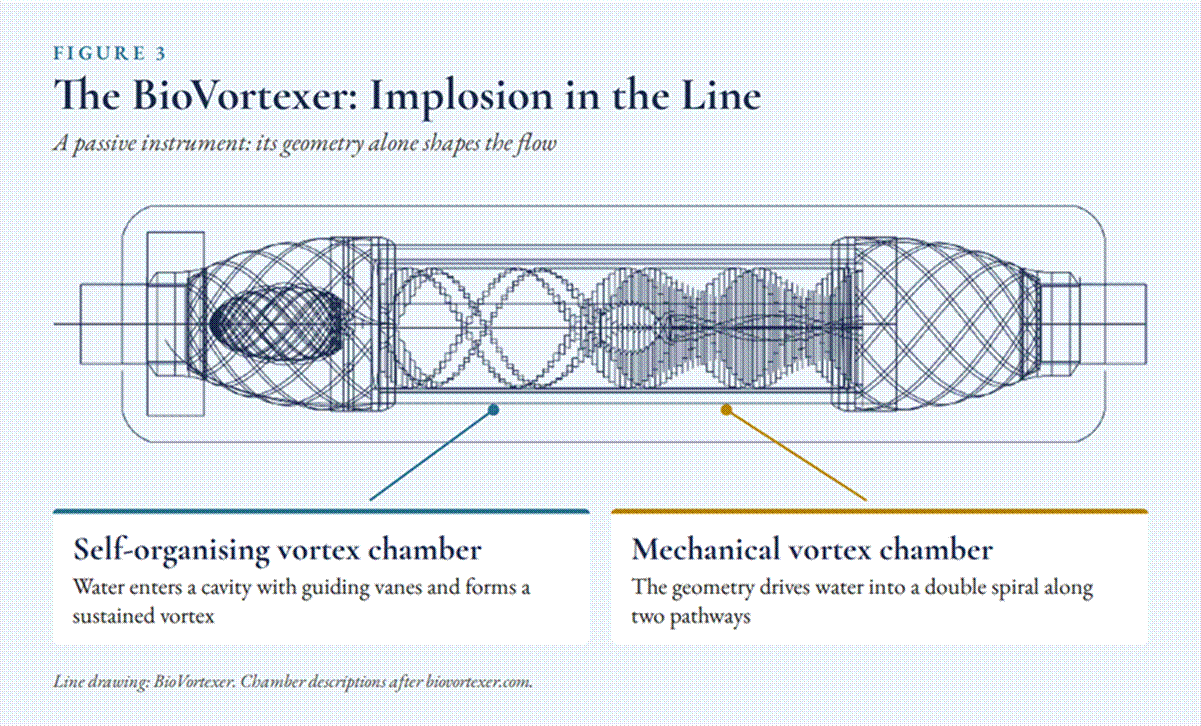
Figure 3. The BioVortexer: the self-organizing and mechanical vortex chambers.
The reported results bear directly on the mechanisms traced above. BioVortexer water carries higher dissolved oxygen and lower surface tension. In side-by-side weighings photographed at biovortexer.com, plants raised on BioVortexer water come in at nearly 50% more growth, with markedly greater root development, than plants on untreated bore water. The protocol behind those weighings is yet to be published, so the figure stands as an in-house result awaiting independent trial.. Lower surface tension bears on soil capillarity and seed imbibition. Richer dissolved oxygen supports root respiration, which powers the active uptake of nutrients. The implosive, φ-proportioned flow is the proposed source of the coherent organization discussed in the sections on energetic cost and geometric resonance.
Growers working with vortex-treated water more broadly are finding the same pattern. At South Regional TAFE in Bunbury, Western Australia, Pamela Patane and Laurie Barnes grew organic Ox Heart and Jaune Flamme tomatoes for fifteen weeks, from October 2025 to February 2026, in three raised beds: a filtered-water control, filtered water passed through a vortex generator, and vortex water with an added 432 Hz scalar frequency. Both vortex beds received 18.2% less irrigation than the control. The vortex bed yielded 21.15 kg against the control’s 17.16 kg, a gain of 23%, and the vortex-plus-frequency bed yielded 41.38 kg. Water productivity rose from 0.88 kg of tomatoes per irrigation hour in the control to 1.33 kg with vortex water, and to 2.60 kg with vortex and frequency together. Beneath the plants, soil microbial biomass nearly doubled in the vortex bed (2,599 against 1,367 micrograms per gram), and the fungal-to-bacterial ratio rose from 0.3:1 to 1.3:1. The trial ran one bed per treatment, and its authors call for replicated trials with standardized irrigation as the next step. Less water, more fruit, and a livelier soil: the whole proposition of this article, demonstrated in three garden beds.
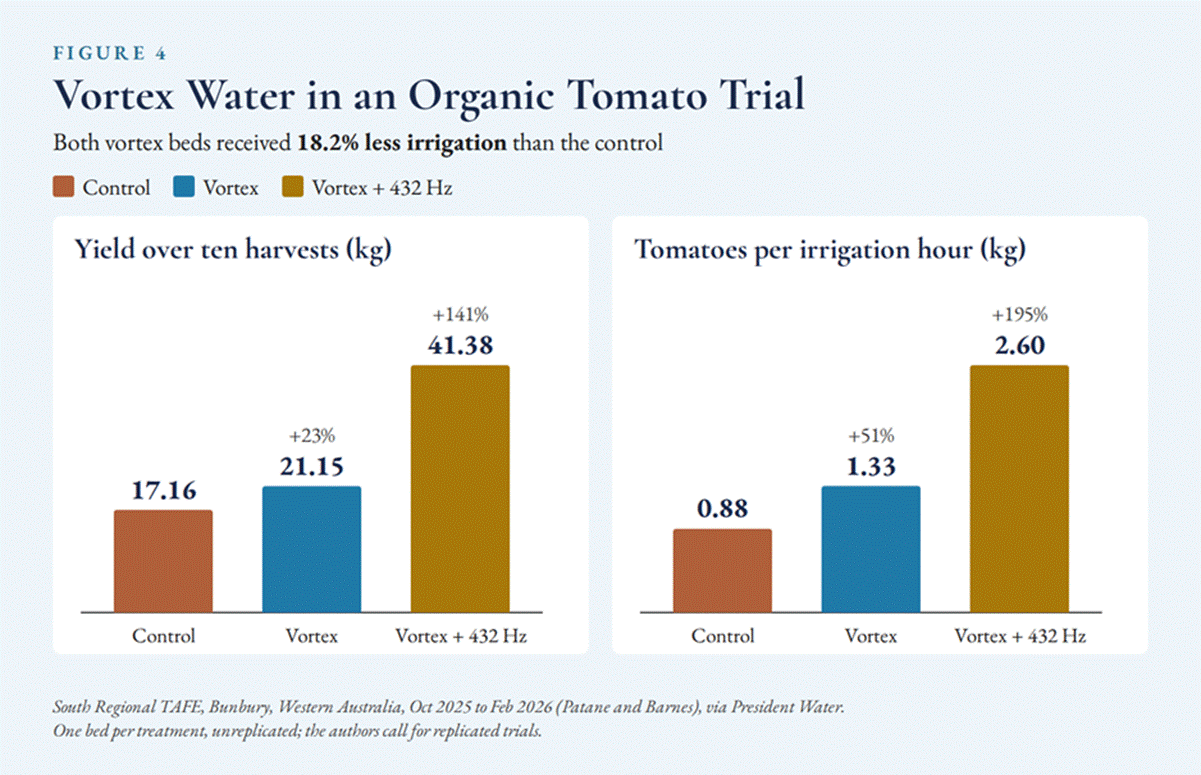
Figure 4. Yield and water productivity in the South Regional TAFE organic tomato trial, 2025–26.
We can see from this why the instrument belongs in the irrigation line itself. Every watering renews the plant: the root zone rehydrates, and the xylem re-establishes its water columns and its wall-bound exclusion zones. An inline BioVortexer at the pump outlet treats precisely the water that meets the plant at that moment.
VII. The Research Gap and the Path Forward
The individual steps in this causal chain are each separately established in the peer-reviewed literature: spectroscopic changes in vortex-treated water are documented; altered aquaporin conductance under different water states is measurable; EZ water in plant xylem is confirmed; yield improvements under structured water irrigation are reported across multiple crop species and research groups. What is not yet available is an integrated study tracing the complete pathway from water treatment geometry through water physical state to aquaporin throughput to turgor to yield under controlled field conditions.
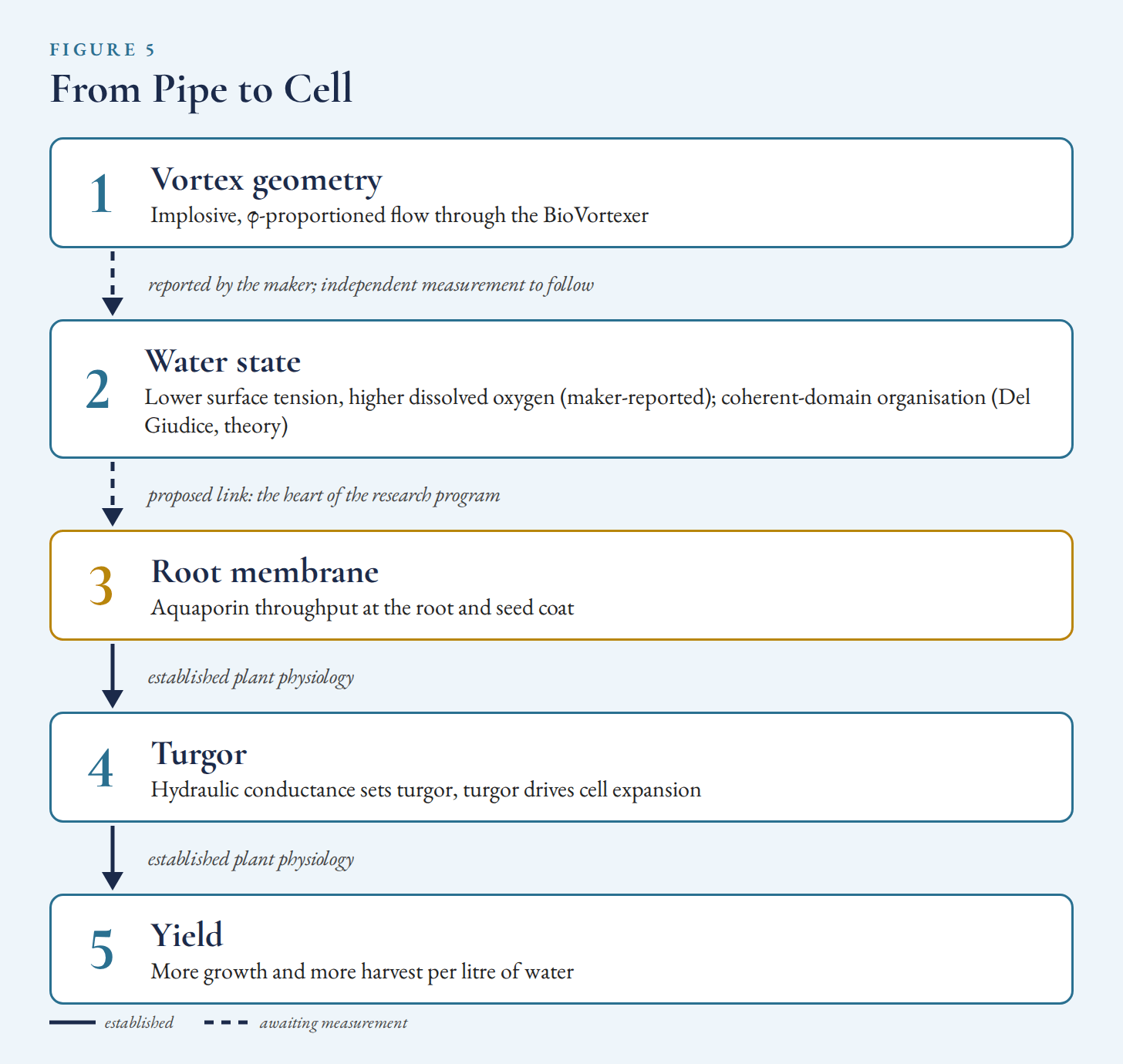
Figure 5. From pipe to cell: the causal chain as it stands, with established links solid and links awaiting measurement dashed.
Figure 5 sets out the chain as it currently stands. The connective experiment can be stated concretely. Replicated beds or plots, with and without an inline BioVortexer at the pump outlet, each group watered at full and at reduced volume, give a simple factorial design: the replicated trial the Bunbury authors themselves call for. Alongside yield and total water applied, the measurements that trace the chain are these: surface tension and dissolved oxygen of the treated water at the outlet; root hydraulic conductivity; leaf water potential and stomatal conductance between waterings; soil microbial biomass; and silicon content in the leaf. A companion greenhouse trial allows the aquaporin step to be isolated with standard hydraulic-conductivity methods and with aquaporin inhibitors, which reveal how much of any difference passes through the channels themselves. Water productivity, harvest per cubic meter applied, then becomes the single figure that growers and financial partners can hold.
That gap is precisely the research program that gives this work its scientific and commercial moment. The components are established; the connective experiment is the contribution. The appropriate methodology is the Goethean one: sustained, attentive study of the phenomenon in its wholeness before analytical reduction — beginning with careful observation of the crop response, then working inward toward the molecular explanation, rather than beginning from theory and working outward toward application.
We know it works. The how is discernible in progress, and the path of that discernment is itself the research.
Agriculture draws about three quarters of the freshwater humanity uses, and every harvest on Earth is built from water. The water that moves through a field returns to the atmosphere, the aquifer and the river, carrying whatever order we have given it. It will be discerned that the question of how we move water through a pipe opens onto the question of how we meet the living world as a whole. Schauberger’s counsel to comprehend and copy Nature holds at every scale, from the icosahedral cluster in the cell, to the vortex in the line, to the weather over the field. The farmer who gives water back its own movement speaks to the crop in its own language, and the crop answers in fruit, grain and vegetable.

Enter the Geometry
Everything in this piece rests on one perception: liquid water carries a geometry, the pentagonal, φ-proportioned order of the icosahedron, and that geometry is the ground on which the living cell, the vortex and the crop all build. Hexagonal order belongs to ice. Icosahedral order belongs to living water.
The Sacred Geometry of Water, my four-hour master class, builds that perception step by step: Martin Chaplin’s icosahedral hierarchy, from five molecules to 1,820; Emilio Del Giudice’s coherent domains; the exclusion zone read in its true geometry; Schauberger’s implosive vortex; and the geocosmic sensitivity of water documented by Giorgio Piccardi. You leave with the geometry in hand, able to see it in a stream, a seed and a glass of water, and equipped to judge for yourself every claim made for structured water.
Recorded in four parts and available now at water.alkemix.art

Selected References
Chaplin, Martin. Water Structure and Science. London South Bank University. https://web.archive.org/web/20250710001556/https://water.lsbu.ac.uk/water/
Ho, Mae-Wan. 2014. “Illuminating Water and Life.” Entropy 16 (9): 4874–4891. https://doi.org/10.3390/e16094874
Ma, Jian Feng, Kazunori Tamai, Naoki Yamaji, et al. 2006. “A Silicon Transporter in Rice.” Nature 440: 688–691.
Maurel, Christophe, Yann Boursiac, Doan-Trung Luu, Véronique Santoni, Zaigham Shahzad, and Lionel Verdoucq. 2015. “Aquaporins in Plants.” Physiological Reviews 95 (4): 1321–1358. https://doi.org/10.1152/physrev.00008.2015
Merrick, Richard. 2010. Interference: A Grand Scientific Musical Theory. Self-published. http://interferencetheory.com/
Messori, Claudio. 2019. “The Super-Coherent State of Biological Water.” Open Access Library Journal 6: e5236. https://doi.org/10.4236/oalib.1105236
Patane, Pamela, and Laurie Barnes. 2026. “2025–2026 Organic Tomato Trial,” South Regional TAFE, Bunbury. Case study published by President Water. https://presidentwater.com/case-studies/sr-tafe-tomato
Schwenk, Theodor. 1965. Sensitive Chaos: The Creation of Flowing Forms in Water and Air. London: Rudolf Steiner Press.
Wang, Anqi, and Gerald H. Pollack. 2024. “Exclusion-Zone Water inside and outside of Plant Xylem Vessels.” Scientific Reports 14: 12071. https://doi.org/10.1038/s41598-024-62983-3
Yagihara, Shin, et al. 2019. “Physical Meanings of Fractal Behaviors of Water in Aqueous and Biological Systems with Open-Ended Coaxial Electrodes.” Sensors 19 (11): 2606. https://doi.org/10.3390/s19112606
BioVortexer. Device description and reported results. https://biovortexer.com
Fractal Water. 2026. “Seed Germination Research Library.” https://www.fractalwater.com/2026/05/fractal-water-seed-germination-research-library/
© 2006 Thomas Joseph Brown · alkemix.art · thomasbrown.org
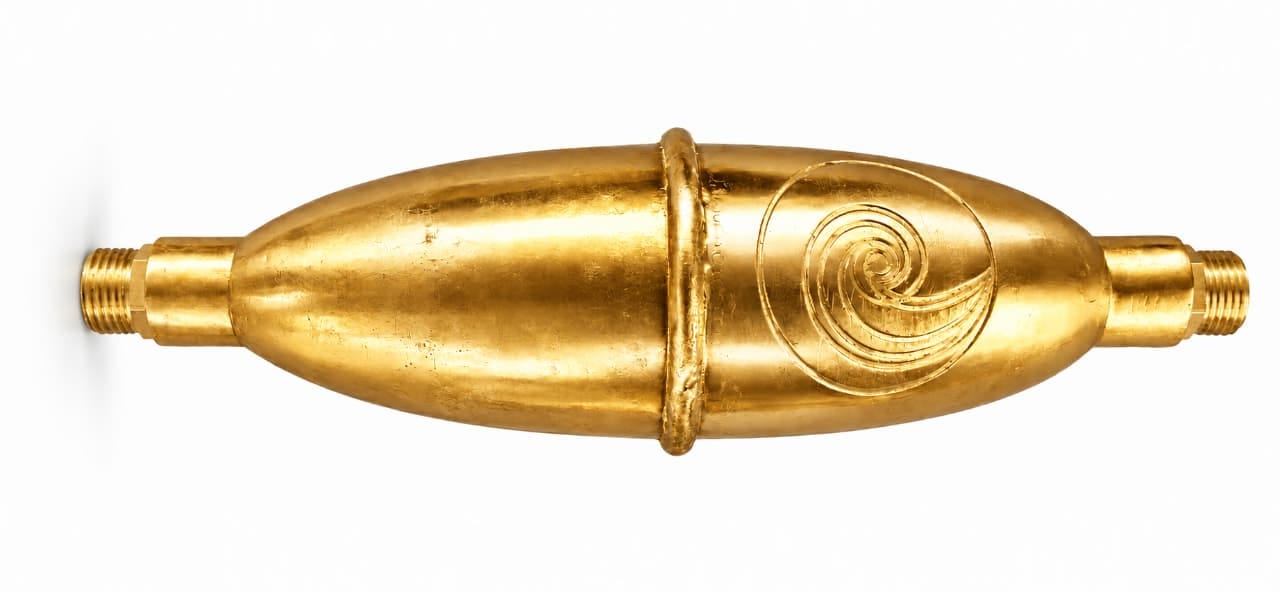
Gold-plated BioVortexer design