



Editorial note, 29 September 2026. Close critical reading since publication has sharpened this piece at several points and corrected it at two. Section III proposed that water clusters pass aquaporin channels more readily by virtue of their structure; the channel passes water in single file through a constriction narrower than any cluster, so that route is closed, and I have replaced it with routes that remain open. The claim that vortex treatment lowers surface tension goes out of Sections V and VI: no vortex-only measurement exists in the peer-reviewed record, one commercial technical report found no detectable change, and the established causal direction runs the other way, with surface tension governing how a vortex forms. I have added the peer-reviewed vortex literature that does exist, which turns out to include Schauberger-derived geometry rendered as laboratory apparatus, and a survey of the wider agricultural evidence with its null results included. My thanks to the readers who pressed these points.
“Comprehend and copy Nature.” —Viktor Schauberger
Overview
Agriculture consumes approximately 75% of global freshwater resources. Against the dual pressures of population growth and increasing aridity, the efficiency with which that water delivers biological benefit becomes a matter of civilizational consequence. A growing body of experimental work reports that water subjected to vortex treatment, geometric structuring, or specific field exposures produces measurable improvements in germination rates, plant biomass, and crop yield, in many trials at equivalent or reduced water volume. That body of work is uneven in quality, and Section VII weighs it.
The standard question put to these findings is: how? What actually changes in the water, and how does that change translate into plant response? Herein I address that question from the level of molecular biophysics upward, drawing on established research in water structure, aquaporin physiology, and the electromagnetic coherence of living cells. The framework I apply belongs to what I call the Sacred Geometry of Water: the recognition that liquid water carries an intrinsic φ-based icosahedral geometry that is the molecular basis of biological coherence.
The question carries particular weight wherever water is scarce and harvests must grow. My own interest here is practical as well as philosophical. The bioarchitect Juan Schlosser and I worked out the flow geometry of the BioVortexer from Viktor Schauberger’s studies of how living streams move, and the instrument now stands ready to be placed in irrigation lines. The sections that follow trace the path from the vortex in the pipe to the water in the cell, name the researchers and data at each step, and mark clearly which links are established and which await measurement. We can see from this map exactly where the next experiment belongs.
I. The Cell Interior Is Already a Structured Water Environment
The first and most important point of departure: plant cells do not contain bulk water. The water inside a living cell is extensively organized against protein surfaces, membrane interfaces, cytoskeletal fibers, and organelles. It is not the statistical liquid of a glass of water. It is a dynamically coherent medium shaped by the biological architecture it inhabits.
This is examined at the vascular level by a 2024 study in Scientific Reports reporting exclusion zone (EZ) water both inside plant xylem vessels and on their external surfaces. The xylem wall is lined with hydrophilic surfaces that generate a charge-separated, proton-extruded zone of organized water, which the authors offer as an interfacial contribution to upward sap flow, standing alongside the classical cohesion–tension account.
The study deserves precise description. Anqi Wang and Gerald Pollack examined isolated xylem vessels from four vegetables (cabbage, celery, asparagus and pumpkin), suspended fluorescent microspheres in the surrounding water, and watched the spheres withdraw from the vessel walls. Exclusion zones of 133 to 142 micrometers formed in cabbage, celery and asparagus; pumpkin vessels built zones up to 240 micrometers wide, growing inward from the wall toward the center of the vessel over time. The authors write that “EZ generation inside xylem vessels is associated with water flow, likely driven by a proton gradient,” and they offer it as an interfacial mechanism complementing the classical cohesion–tension account, with its full physiological role in the living plant yet to be mapped.
The exclusion itself is reproducible and undisputed. Its interpretation carries a live argument, since a competing account explains the withdrawal of microspheres by diffusiophoresis arising from ion gradients at the surface, calling on no new water physics. Elton, Spencer, Riches and Williams set that critique out at length in the International Journal of Molecular Sciences in 2020. I hold the structural interpretation.
Here, then, is a charge-separated, electrically active water layer, hundreds of molecular diameters thick, standing along the walls of the plant’s own plumbing. The vascular system of the plant is, in the most literal sense, a bundle of charged hydrophilic tubes that organize the water passing through them. (Botany textbooks describe mature xylem vessels as dead tissue, which makes their electrical liveliness all the more instructive.)
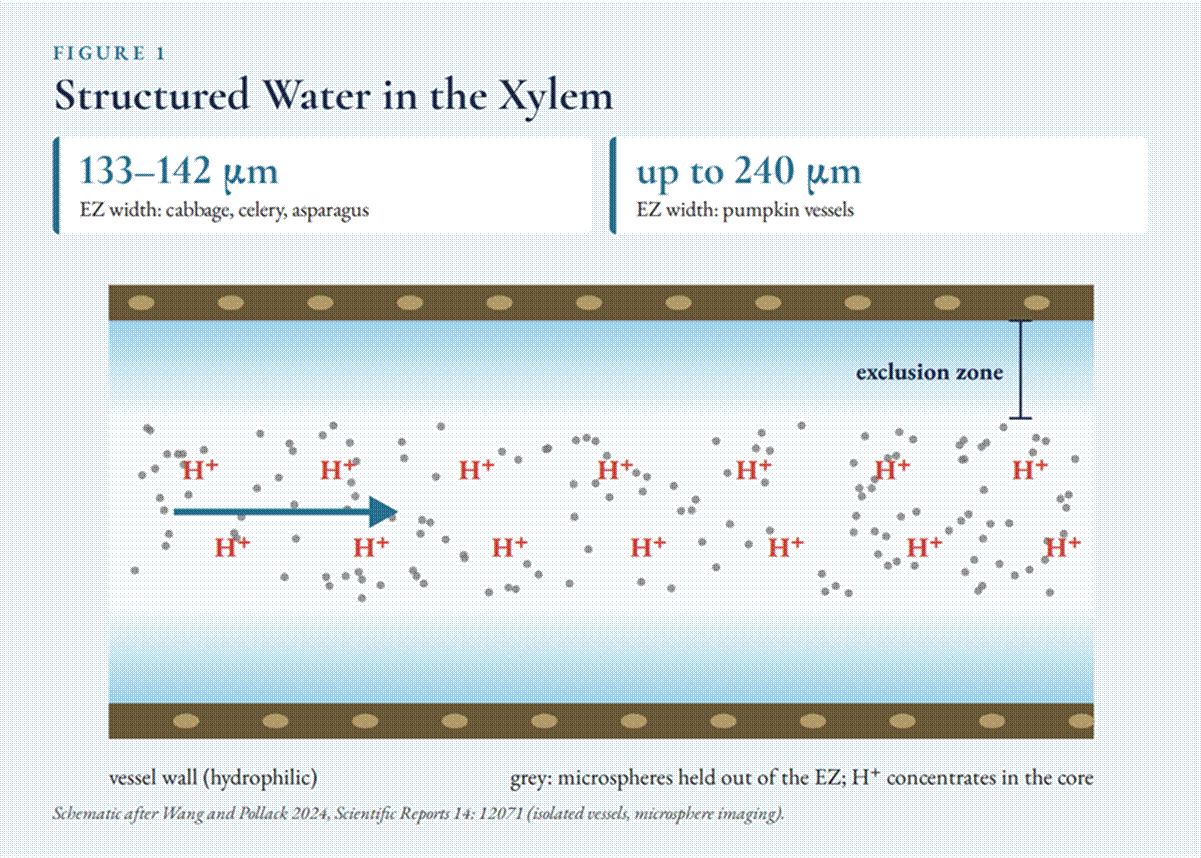
Figure 1. Exclusion-zone water along the walls of plant xylem vessels, after Wang and Pollack (2024).
The consequence sets the question for everything that follows. Structured water entering the root system meets a biological system already oriented toward maintaining that kind of organization. The plant is itself a structured water instrument.
A reader who thinks the mechanism through arrives quickly at an objection. If the xylem wall organizes water by itself, continuously, at the wall, then water arriving already organized would be redundant, the wall performing the work regardless.
The field record answers it. Were the wall’s ordering sufficient, treatment upstream of the root would show nothing at all, and across the trials gathered in Section VII it shows a great deal. What the observations establish is that something in the incoming water reaches the plant. Which route it travels stays open, and Section VIII names the candidates and the experiment that separates them.
II. The Energetic Cost of Structuring
The quantum electrodynamic framework developed by Emilio Del Giudice at INFN Milan offers the operative mechanism I have worked with. Coherent domains, approximately 100 nm regions of phase-locked molecular oscillation organized by a self-trapped electromagnetic field, were derived from quantum field theory as a property of liquid water. That derivation is theoretical, and direct experimental confirmation of the domains is yet to be obtained, so what follows is built on a derivation rather than a measurement.
The proposal drawn from it needs stating more carefully than I stated it. I wrote that the cell expends metabolic energy ordering incoming water and that structured input reduces the expenditure. No measured quantity yet corresponds to that. Water entry into cells is passive, down the water potential gradient, and interfacial ordering at membranes and macromolecular surfaces is paid for by surface free energy rather than by ATP.
Plants do spend metabolic energy on water management: osmotic adjustment through solute accumulation, ion pumping to hold gradients, aquaporin gating, and the upkeep of membrane and cytoskeletal organization. Whether any of those costs answer to the physical state of arriving water is the question, and it is answerable by experiment. The coherent-domain account stands as one candidate route by which the incoming water reaches the plant. Section VIII sets it beside the others.
Mae-Wan Ho, reviewing the Del Giudice program in Entropy in 2014, drew out its most striking consequence for living systems. Within each coherent domain the water molecules oscillate between the ground state and an excited state close to the ionization potential of water, producing, in her words, “a plasma of almost free electrons favouring redox reactions, the basis of energy metabolism in living organisms.” Ho further proposed that coherent domains stabilized at membrane surfaces supply excited interfacial water that splits with less energy, easing the first step of photosynthesis.
Thinking along these lines, the question of irrigation water becomes a question of electrical supply. A crop is a vast array of photosynthetic membranes bathed in water, and the readiness with which that water yields its electrons governs the rate at which light becomes sugar. My extension of Ho’s argument, offered as a hypothesis for measurement, is that water arriving already coherent brings its plasma of quasi-free electrons with it into the leaf.
Among the candidate routes weighed in Section VIII, the energetic account is the deepest and the least measured. It earns its place by surviving a trial designed to eliminate the shallower ones.
III. Aquaporins: The Molecular Gateway
Water crosses biological membranes through aquaporin proteins, channels whose narrowest constriction measures roughly 2.8 Ångströms. One question that dimension settles. A pore narrower than any water cluster passes water in single file, so a cluster carried to the membrane is taken apart at the entrance. I proposed in the first version of this section that structured water passes more readily by virtue of its cluster geometry surviving the transit, and the architecture of the channel closes that route.
The same architecture opens another. An aquaporin is an electrostatic device before it is a narrow hole, and its central task is to pass water while excluding protons. It performs that task at the channel midpoint, where the two asparagines of the NPA motifs hydrogen-bond to each passing molecule and flip its dipole, breaking the chain along which a proton would otherwise hop; a conserved arginine at the constriction adds its charge to the barrier. What the channel answers to is dipole orientation, the availability of hydrogen-bond donors and acceptors, and proton activity.
Each of those is a property of the water arriving at the membrane, and one of them has a documented route to conductance. Plant aquaporins gate on cytosolic pH through the protonation of a conserved histidine on loop D, His193 in the spinach channel SoPIP2;1, the structural mechanism established by Susanna Törnroth-Horsefield and colleagues in Nature in 2006 and detailed by Frick, Järvå and Törnroth-Horsefield in 2013. The trigger those authors document is anoxia: oxygen starvation in a waterlogged root zone acidifies the cytosol, the histidine takes up a proton, and the channel closes. Anoxia is the documented trigger, which shows the gate answers to the chemical condition of the root zone. Whether treated water alters that condition is the step awaiting measurement.
Which recasts the question at the center of this research program. The quantity worth measuring was never whether a geometric arrangement squeezes through a 2.8 Ångström pore. It is whether the electrical condition of the arriving water, its protons and its electrons, reaches the gating that governs the channel. A biochemist of my acquaintance once described his whole discipline to me as electro-chemical, the electrons carrying the electrical action and the protons the chemical movement. The aquaporin is where that distinction becomes hardware.
A distinction belongs here between what is measured and what is proposed. The dependence of plant growth on aquaporin conductance is firmly established: Christophe Maurel and colleagues gathered the evidence in their 2015 review in Physiological Reviews, tracing aquaporin control of root hydraulics, leaf water relations and cell expansion. The proposal specific to structured water concerns the step before it, namely the route by which water leaving a vortex reaches the conditions that gate those channels. That step is the hypothesis at the center of the research program, and the experiment that tests it lies well within the reach of an ordinary plant physiology laboratory.
In plant physiology, aquaporin throughput determines turgor pressure at a given osmotic cost. Cell expansion, which drives every growth metric, from root elongation to leaf area to grain fill, is a turgor-pressure phenomenon. More efficient water delivery at the membrane level directly translates to enhanced growth per liter of water consumed. The plant achieves equivalent or superior turgor at lower volumetric water input.
Several aquaporin subtypes — notably the nodulin-26-like intrinsic proteins (NIPs) — transport not only water but also uncharged small molecules: silicic acid, boric acid, urea, and glycerol. Any route by which water treatment reached channel gating would reach nutrient delivery in the same movement. Water efficiency and nutrient efficiency would move together, which is what makes this gateway worth the attention while the route is established.
A clarification of the channel families sharpens the picture. Within the plant aquaporins, CO₂ passage belongs chiefly to the plasma-membrane intrinsic proteins (PIPs), while the NIP family carries silicic acid, boric acid and urea. For rice the NIP story carries particular weight. Jian Feng Ma and colleagues identified the rice silicon transporter Lsi1 in 2006 as a NIP-type aquaporin, and rice ranks among the most silicon-hungry plants on Earth, building silica into its leaves and stems as structural armor against drought, pests and lodging. Silicon therefore travels through the same family of gateways as water, and any gain in channel throughput would reach the plant’s structural strength as well as its hydration.
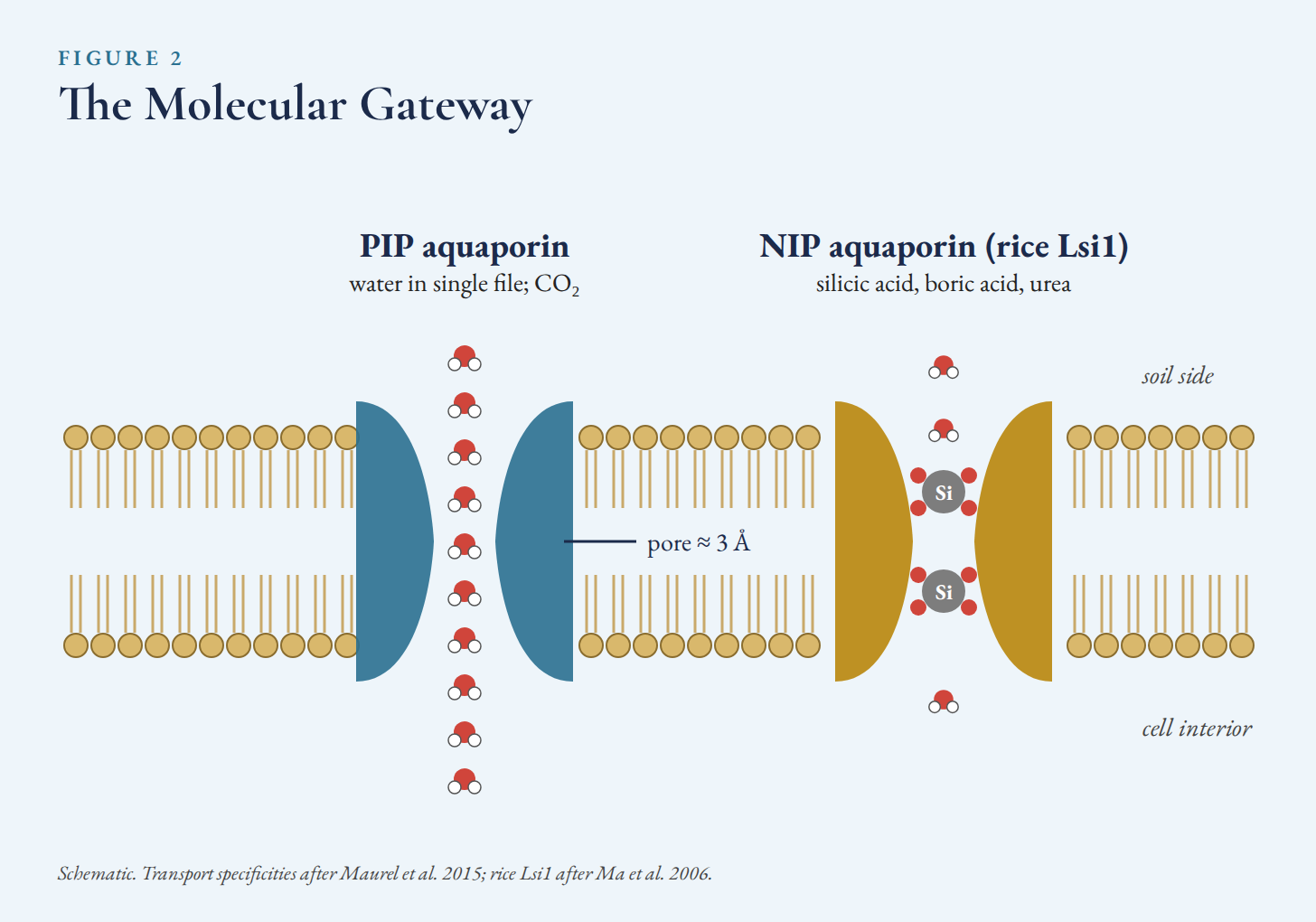
Figure 2. Water and solute passage through plant aquaporins. The rice silicon channel Lsi1 is a NIP-type aquaporin.
IV. Geometric Resonance — Stated in Biophysical Terms
What follows in this section is my own synthesis, joining Chaplin’s molecular geometry and Del Giudice’s field theory to the morphology of living form. Neither thinker drew these connections explicitly; I offer them as a coherent hypothesis grounded in their work.
My thesis on the Sacred Geometry of Water proposes that liquid water carries an intrinsic φ-based icosahedral architecture — Chaplin’s model of 280-molecule icosahedral clusters, each defined by three mutually perpendicular golden rectangles — and that this geometry is the molecular basis of biological coherence. The plant cell, like all living systems, is architecturally calibrated to interface with pentagonal, φ-based water geometry.
Del Giudice derived that coherent domains are selective absorbers: they resonate with and absorb photons only at their characteristic frequency, driving the domain into a coherent excited state from which chemical work can be extracted. The water medium of the cell is not an inert solvent — it is an active electromagnetic participant in biochemical signaling, protein folding, and gene expression.
Structured water in the φ-based icosahedral configuration enters existing cellular coherent domains without requiring the disorganization-and-reorganization step that bulk water demands. The incoming water does not disrupt the cell’s coherent medium; it reinforces it. This is the cellular mechanism of what I describe as resonance with the morphological patterns of biological systems: stated in biophysical terms, it is the compatibility of incoming water’s coherent domain geometry with the cell’s own electromagnetic architecture.
Richard Merrick, reading Chaplin’s hierarchy in Harmonically Guided Evolution, carried the same geometry across to carbon. The stable cage forms of carbon are pentagonal and icosahedral in their own right: C₆₀ is a truncated icosahedron, and the C₈₄ endohedral fullerene reported in 2006 folds into an egg-like cage when two of its pentagons fuse. Water’s pentagonal superclusters and carbon’s pentagonal cages are the two materials from which living tissue is chiefly built, and they share one order. Merrick reads that correspondence as a proportion between an outward-resonating carbon geometry and an inward-damping water geometry. I take the correspondence as observed and the proportion as his reading of it.
Let us consider the plant from the outside in. The five-petalled blossom of the rose family, the five-chambered star revealed when an apple is cut across its equator, and the golden-angle spiral by which leaves and seeds are set around a stem all carry the pentagonal, φ-governed order that Chaplin’s model finds in the water cluster.
The placement of leaves has a mechanical account. Stéphane Douady and Yves Couder showed in 1996 that the golden angle emerges from the packing dynamics of successive primordia, and Didier Reinhardt and colleagues gave the process a molecular basis in polar auxin transport in Nature in 2003. No water geometry enters that explanation. The Goethean observation stands beside it. That one proportion governs the setting of the leaves, the chambering of the fruit, the cages of carbon and the geometry of the medium is a correspondence, and a correspondence is what the method exists to attend to. Claiming one member of it causes another would be a different act, and one I leave to measurement. Irrigation water brought into that geometry meets the plant in a form the plant already builds with.
V. Seed Germination — The Triggering Process
A consistent finding across structured water agricultural trials is enhanced germination rate and uniformity. The cellular mechanism: the seed coat membrane is the most selective and restrictive interface in the system. Germination requires water to penetrate the coat and activate the metabolic enzymatic cascades of imbibition, the initial swelling of the seed as water enters.
The route by which treated water reaches the seed runs through wetting and dissolved gas. Imbibition depends on contact between water and the coat and on the oxygen available to the enzymatic cascades the swelling seed sets going, and a vortex in a free-surface funnel raises dissolved oxygen substantially. Earlier versions of this section attributed the effect to reduced surface tension; the peer-reviewed record holds no vortex-only measurement of surface tension, one commercial technical report found no detectable change, and the established relation runs the other way, with surface tension governing how a vortex forms and holds its air core. Resting on oxygen and wetting instead, imbibition would be triggered at lower total water exposure and more uniformly across the seed batch. Early and uniform germination then cascades through the whole growth cycle: earlier canopy closure, more efficient solar capture, a longer productive period before senescence. A marginal improvement at the first cellular threshold compounds across the season.
VI. Implosion in the Line: The BioVortexer
Viktor Schauberger spent decades watching mountain streams, integrating the supersensible knowledge gained thereby into his vortex technologies. He saw that healthy water, left to itself, moves in spiraling, centripetal paths that cool it, concentrate it and draw it inward toward its own axis, while the straightened channels and centrifugal pumps of modern engineering drive water in the opposite gesture, outward and apart. He called the first movement implosion and the second explosion, and he held that the life of water depends on the first. Theodor Schwenk carried the same observation into the laboratory in Sensitive Chaos, documenting how flowing water forms vortices, spirals and rhythmic surfaces that echo the forms of living organs.
The BioVortexer is the instrument Juan Schlosser and I created from this lineage: a wholly passive device, its only working part the geometry of its chambers, that places Schauberger’s implosive gesture inside an ordinary water line. Two vortex systems work in concert within it. In the mechanical vortex chamber, the geometry drives the water into a double spiral along two pathways. In the self-organizing vortex chamber, the water enters a specially designed cavity with guiding vanes and forms a sustained vortex of its own. Together they achieve, in the maker’s description, “much higher velocities than regular flow vortices limited by gravity,” carrying the water into a sustained, high-velocity, near-frictionless flow state. The water leaves the device having passed through exactly the centripetal, spiraling movement Schauberger read in the mountain stream.
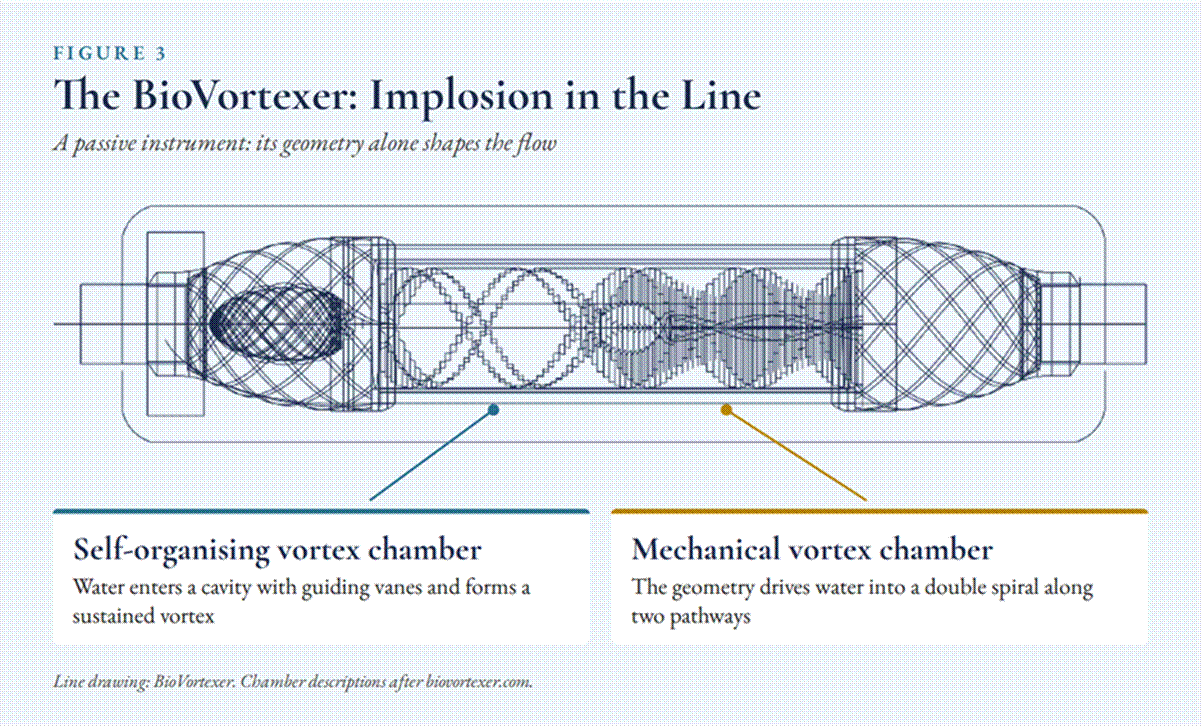
Figure 3. The BioVortexer: the self-organizing and mechanical vortex chambers.
The reported results bear directly on the mechanisms traced above. In side-by-side weighings photographed at biovortexer.com, plants raised on BioVortexer water come in at nearly 50% more growth, with markedly greater root development, than plants on untreated bore water. The protocol behind those weighings is yet to be published, so the figure stands as an in-house result awaiting independent trial. The implosive, φ-proportioned flow is the proposed source of the coherent organization discussed in the sections on energetic cost and geometric resonance.
Growers working with vortex-treated water more broadly are finding the same pattern. At South Regional TAFE in Bunbury, Western Australia, Pamela Patane and Laurie Barnes grew organic Ox Heart and Jaune Flamme tomatoes for fifteen weeks, from October 2025 to February 2026, in three raised beds: a filtered-water control, filtered water passed through a vortex generator, and vortex water with an added 432 Hz scalar frequency. Both vortex beds received 18.2% less irrigation than the control. The vortex bed yielded 21.15 kg against the control’s 17.16 kg, a gain of 23%, and the vortex-plus-frequency bed yielded 41.38 kg. Water productivity rose from 0.88 kg of tomatoes per irrigation hour in the control to 1.33 kg with vortex water, and to 2.60 kg with vortex and frequency together. Beneath the plants, soil microbial biomass nearly doubled in the vortex bed (2,599 against 1,367 micrograms per gram), and the fungal-to-bacterial ratio rose from 0.3:1 to 1.3:1. The trial ran one bed per treatment, and its authors call for replicated trials with standardized irrigation as the next step. Less water, more fruit, and a livelier soil: the whole proposition of this article, demonstrated in three garden beds.
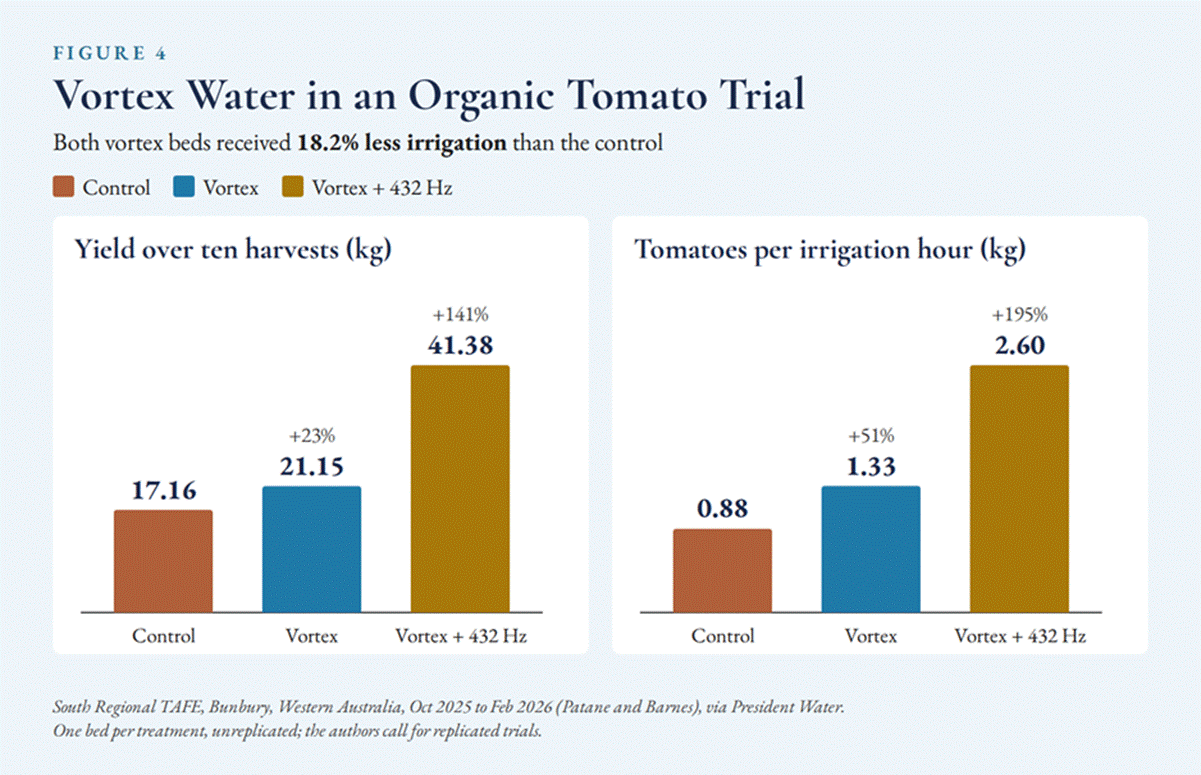
Figure 4. Yield and water productivity in the South Regional TAFE organic tomato trial, 2025–26.
We can see from this why the instrument belongs in the irrigation line itself. Every watering renews the plant: the root zone rehydrates, and the xylem re-establishes its water columns and its wall-bound exclusion zones. An inline BioVortexer at the pump outlet treats precisely the water that meets the plant at that moment.
VII. Weighing the Record
A thesis is owed an honest account of what stands behind it, nulls and all, and the account divides into two bodies: what has been measured in the water, and what has been harvested from the ground.
On the water, the peer-reviewed record is better than I had supposed and narrower than the trade literature claims. Klymenko and colleagues published a laboratory protocol in the Journal of Visualized Experiments in 2023 under the title Preparation of Free-Surface Hyperbolic Water Vortices, describing their apparatus explicitly as the special vortex Walter Schauberger proposed in the 1960s, and documenting its stable hydraulic regimes, its enlarged and strongly turbulent air–water interface, the pressure variation along that interface, and the helical transport of boundary-layer disturbances. Agostinho and colleagues measured oxygen transfer in the same geometry and found that the twisted regime, the one carrying a helical air core, produced unusually high transfer coefficients at a specific energy demand around 0.01 kWh per kilogram of oxygen. Schauberger's implosive geometry, in other words, has been built as laboratory apparatus in its free-surface form and measured, and what that apparatus demonstrably does is move gas into water with unusual efficiency. Those results belong to open vortices with an air core and are not claimed for the sealed inline units in the field trials below.
What that literature has yet to measure is equally worth stating. No study in it reports post-vortex surface tension, conductivity, viscosity, or spectroscopic evidence of molecular restructuring. One commercial technical report found no surface-tension change at all. The persistent effects that are demonstrated belong to the mesoscopic scale: dissolved gases, microbubble and nanobubble populations, redox state, mineral speciation. That scale is where I would now look first for whatever the treated water carries to the root.
On the ground, the peer-reviewed agricultural literature is modest. A 2020 field trial in the Polish Journal of Environmental Studies reported radish total yield up 12.6 percent and marketable yield up 18.9 percent under structured water, with a companion hydroponic lettuce trial showing marketable yield up 6.7 percent while total yield moved insignificantly, and a blueberry trial in Acta Horticulturae reporting 11.3 percent. Most carry manufacturer-affiliated authorship, and the radish design leaves a possible microclimate confound in its rain covers. A vortex-only tomato pilot at the Swedish University of Agricultural Sciences found significant differences in height, stem width and internode length, found nothing in biomass, leaf area or leaf count, and stopped before fruit.
A larger and older body of paired field comparisons sits in the Crystal Blue program in India, reports of which came to me in 2019: borewell water against structured water at a dozen sites across two states, cotton and maize and sugar cane and mulberry and paddy and beans and radish, several carrying matched areas and plant counts alongside the photographs. Behind them stands a completion report from the Water Technology Centre at Tamil Nadu Agricultural University, Coimbatore, covering two seasons from April 2013 to March 2015, with cotton returning 36.6 percent above control, tomato 39.55, bhendi 35.84, tapioca 19.06, sorghum 2.96, and onion coming in below control. That work was vendor-sponsored, ran a single unreplicated strip per treatment, and carries no statistics across thirty-eight tables. One line in it holds me still: the university found no difference in the chemical properties between structured water and ordinary water. The first of the trial’s three stated objectives was to assess whether the structured water unit altered the chemical composition and quality parameters of the water. The investigators looked, and reported no difference, while the crops grown under that same water returned the yields above.
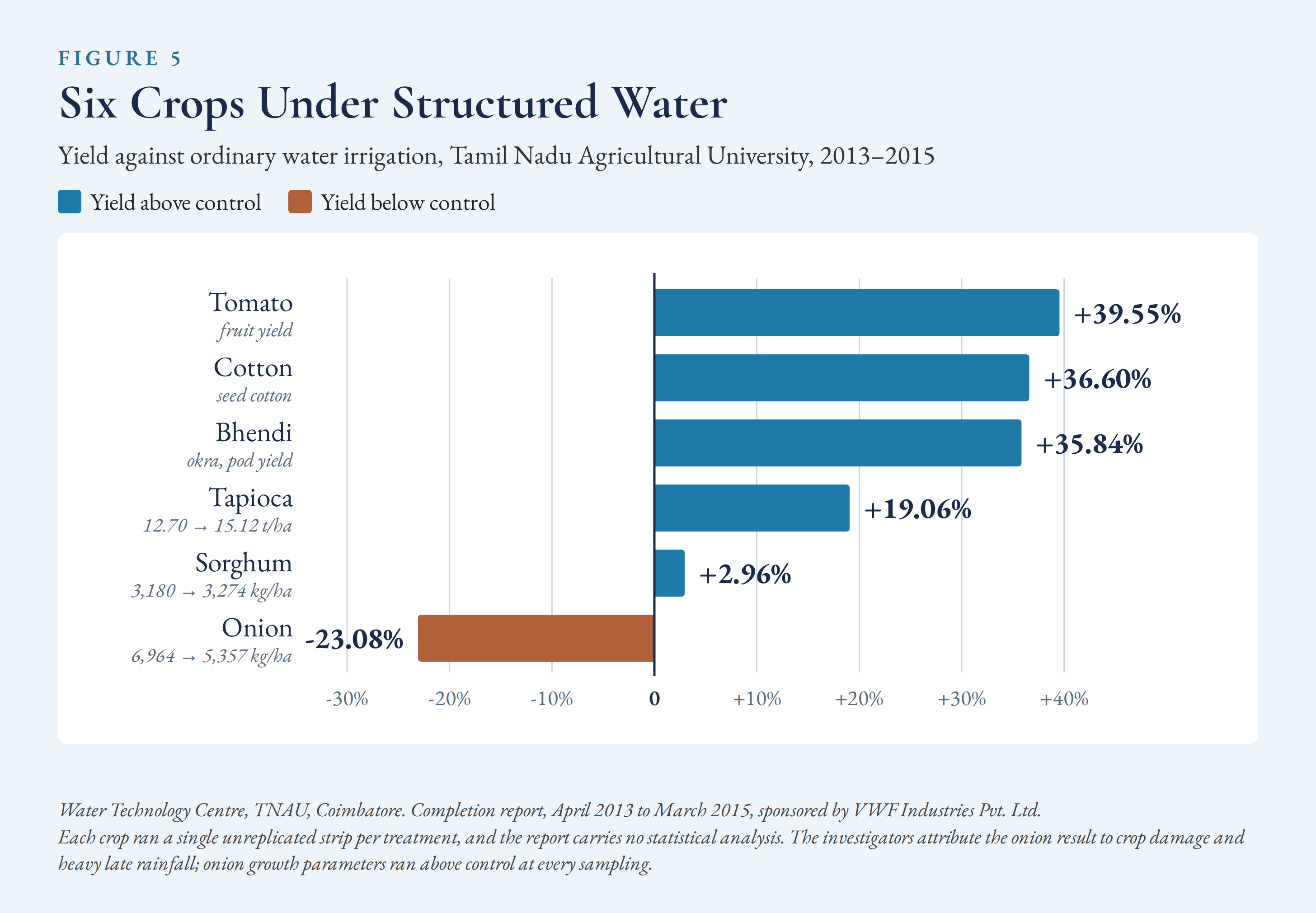
Figure 5. Yield under structured water against ordinary water irrigation, six crops, Tamil Nadu Agricultural University Water Technology Centre, 2013–2015.
The Bunbury trial described above is the most recent and the only one of these that ran alongside a control. Its middle bed interests me most: vortex geometry alone, against a filtered-water control, on 18.2 percent less irrigation, returning 23 percent more fruit. One bed per treatment confounds treatment with position, which its authors say plainly.
The record comes in two parts that leave open questions. In the laboratory, free-surface vortices built to Schauberger's geometry have been measured and shown to move gas into water efficiently. In the field, inline units, which have no air interface, have been followed by mostly higher yields across many crops, soils and growers, though nearly always without replication, and with a null or two in the Tamil Nadu data. What the inline units change in the water, if anything, has not been measured. That falls short of proof, though it is certainly enough to justify further trials with more rigorous parameters..
VIII. The Research Gap and the Path Forward
The steps in this chain stand in different conditions, and stating each precisely is the work of this section. Aquaporin governance of plant water relations is established. Exclusion zone water in plant xylem is published, its interpretation contested. Schauberger-geometry vortices are established as efficient gas-transfer devices, measured in the peer-reviewed literature. Yield improvements under structured water irrigation are reported across multiple crops and sites, at the weight Section VII gives them. Spectroscopic changes specific to vortex-treated water I have been unable to locate in the published record, and I withdraw the claim that they are documented until I can produce the study. The route from treated water to aquaporin gating is proposed and unmeasured. Two links, then, carry the weight of the chain, and both are reachable by a single trial.
One objection meets this argument early and deserves a direct answer. Free-surface vortices entrain air, root hypoxia limits respiration and nutrient uptake, and aeration reliably improves growth. Why look further than dissolved oxygen? Because the gas-transfer literature concerns free-surface vortices, which draw air down an open core, while the units in this record are sealed inline devices with no air interface, so aeration is not the expected mechanism. What a closed vortex can do is mechanical: drop pressure, shear the flow and cavitate. The grower's question is device or no device, and the trial below is built to answer it.
Which leaves the question in a sharper form. The devices at work across this record are sealed inline units, and whatever the geometry hands to the plant, it hands over in a closed pipe. What a closed vortex can still do is mechanical: drop pressure, shear the flow, cavitate at the core, and bring dissolved gas out of solution as microbubbles. So the question the trial actually poses is whether the geometry hands the plant anything the plumbing does not.
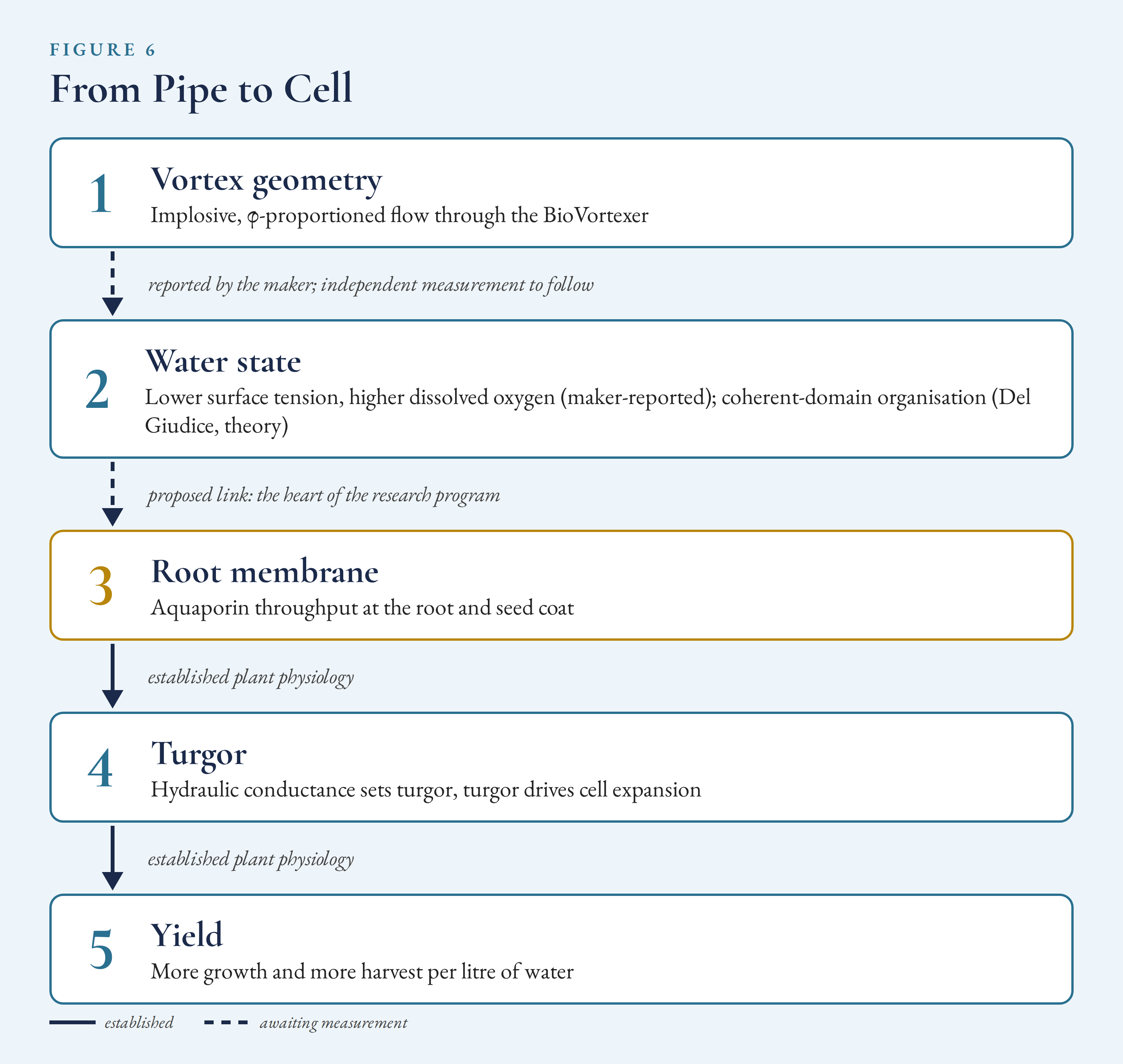
Figure 6. From pipe to cell: the causal chain as it stands, with established links solid and links awaiting measurement dashed.
Figure 6 sets out the chain as it currently stands. The connective experiment can be stated concretely. The test is simple. Plants of one species watered identically from a split line, one side passing through a vortex structuring unit, and the question is whether they come in larger and better.
Four plots or pot groups per side, assigned at random, so the comparison carries an error term rather than an impression. Code the two sides so that whoever weighs and grades the harvest works without knowing which is which.
Record the water applied to each side and weigh the harvest. Size and quality against water used is the whole of the result.
I hold that it works, on forty years of looking, and this article supplies grounds for the conviction rather than proof of it. The how is discernible in progress, and the path of that discernment is itself the research.
Agriculture draws about three quarters of the freshwater humanity uses, and every harvest on Earth is built from water. The water that moves through a field returns to the atmosphere, the aquifer and the river, carrying whatever order we have given it. It will be discerned that the question of how we move water through a pipe opens onto the question of how we meet the living world as a whole. Schauberger’s counsel to comprehend and copy Nature holds at every scale, from the icosahedral cluster in the cell, to the vortex in the line, to the weather over the field. The farmer who gives water back its own movement speaks to the crop in its own language, and the crop answers in fruit, grain and vegetable.

Selected References
Agostinho, L. L. F., Pecnik, R., Woisetschläger, J., de Kroon, E., Şişcanu, N., van de Griend, M. V., Loiskandl, W., & Fuchs, E. C. (2022). Enhanced oxygen volumetric mass transfer in a geometrically constrained vortex. Water, 14(5), Article 771. https://doi.org/10.3390/w14050771
Chaplin, Martin. Water Structure and Science. London South Bank University. https://web.archive.org/web/20250710001556/https://water.lsbu.ac.uk/water/
Elton, Daniel C., Peter D. Spencer, James D. Riches, and Elizabeth D. Williams. 2020. “Exclusion Zone Phenomena in Water: A Critical Review of Experimental Findings and Theories.” International Journal of Molecular Sciences 21 (14): 5041.
Douady, Stéphane, and Yves Couder. 1996. “Phyllotaxis as a Dynamical Self Organizing Process.” Journal of Theoretical Biology 178 (3): 255–312.
Frick, Anna, Michael Järvå, and Susanna Törnroth-Horsefield. 2013. "Structural Basis for pH Gating of Plant Aquaporins." FEBS Letters 587 (7): 989–993. https://doi.org/10.1016/j.febslet.2013.02.038
Gluch, M., Gronek, J., Karch, J., Skrobiszewski, A., & Chohura, P. (2021). Impact of structured water on yield and crop quality of radish (Raphanus sativus L.). Polish Journal of Environmental Studies, 30(5), 4895–4899. https://doi.org/10.15244/pjoes/131807
Gluch M, Gronek J, Karch J, Skrobiszewski A, Chohura P. Impact of structured water on yielding and quality of lettuce (Lactuca sativa L.) growth using hydroponic system. International Journal of Agricultural Science. 2021;6:81–86. ISSN 2367-9026. https://www.iaras.org/iaras/filedownloads/ijas/2021/014-0012(2021).pdf
Gluch, M., J. Karch, J. Pannek, A. Skrobiszewski, M. Czaplicka, E. Gudarowska, J. Krężel, P. Bąbelewski, and P. Chohura. 2025. "The Potential of the Hydreset Irrigation Support System to Increase the Productivity of Pot-Growing Blueberries." Acta Horticulturae 1444: 219–224. https://doi.org/10.17660/ActaHortic.2025.1444.29
Ho, Mae-Wan. 2014. “Illuminating Water and Life.” Entropy 16 (9): 4874–4891. https://doi.org/10.3390/e16094874
Klymenko R, Cerutti L, Colombo MBA, Fuchs EC, Woisetschläger J, Hoeben WFLM, Agostinho LLF. Enhanced groundwater aeration with a geometrically constrained vortex. Water. 2025;17(4):506. https://doi.org/10.3390/w17040506
Klymenko, R., Nanninga, H., de Kroon, E., Agostinho, L. L. F., Fuchs, E. C., Woisetschläger, J., & Hoeben, W. F. L. M. (2023). Preparation of free-surface hyperbolic water vortices. Journal of Visualized Experiments, (197), e64516. https://doi.org/10.3791/64516
Ma, Jian Feng, Kazunori Tamai, Naoki Yamaji, et al. 2006. “A Silicon Transporter in Rice.” Nature 440: 688–691.
Maurel, Christophe, Yann Boursiac, Doan-Trung Luu, Véronique Santoni, Zaigham Shahzad, and Lionel Verdoucq. 2015. “Aquaporins in Plants.” Physiological Reviews 95 (4): 1321–1358. https://doi.org/10.1152/physrev.00008.2015
Merrick, Richard. 2010. Harmonically Guided Evolution. http://interferencetheory.com/
Messori, Claudio. 2019. “The Super-Coherent State of Biological Water.” Open Access Library Journal 6: e5236. https://doi.org/10.4236/oalib.1105236
Patane, Pamela, and Laurie Barnes. 2026. “2025–2026 Organic Tomato Trial,” South Regional TAFE, Bunbury. Case study published by President Water. https://presidentwater.com/case-studies/sr-tafe-tomato
Reinhardt, Didier, Eva-Rachele Pesce, Pia Stieger, et al. 2003. “Regulation of Phyllotaxis by Polar Auxin Transport.” Nature 426: 255–260.
Schwenk, Theodor. 1965. Sensitive Chaos: The Creation of Flowing Forms in Water and Air. London: Rudolf Steiner Press.
Törnroth-Horsefield, Susanna, Yi Wang, Kristina Hedfalk, Urban Johanson, Maria Karlsson, Emad Tajkhorshid, Richard Neutze, and Per Kjellbom. 2006. "Structural Mechanism of Plant Aquaporin Gating." Nature 439 (7077): 688–694. https://doi.org/10.1038/nature04316
Vagnell, Malin. 2013. Effect of Vortex-Processed Water on Tomato (Solanum lycopersicum) Plants. Bachelor's thesis, Självständigt arbete vid LTJ-fakulteten. Alnarp: Swedish University of Agricultural Sciences, Department of Horticulture. urn:nbn:se:slu:epsilon-s-2017
van de Griend, Maarten V., Francis Warrener, Meike van den Akker, Yanru Song, Elmar C. Fuchs, Willibald Loiskandl, and Luewton L. F. Agostinho. 2022. “Vortex Impeller-Based Aeration of Groundwater.” Water 14 (5): 795. https://doi.org/10.3390/w14050795
Wang, Anqi, and Gerald H. Pollack. 2024. “Exclusion-Zone Water inside and outside of Plant Xylem Vessels.” Scientific Reports 14: 12071. https://doi.org/10.1038/s41598-024-62983-3
© 2006 Thomas Joseph Brown · alkemix.art · thomasbrown.org
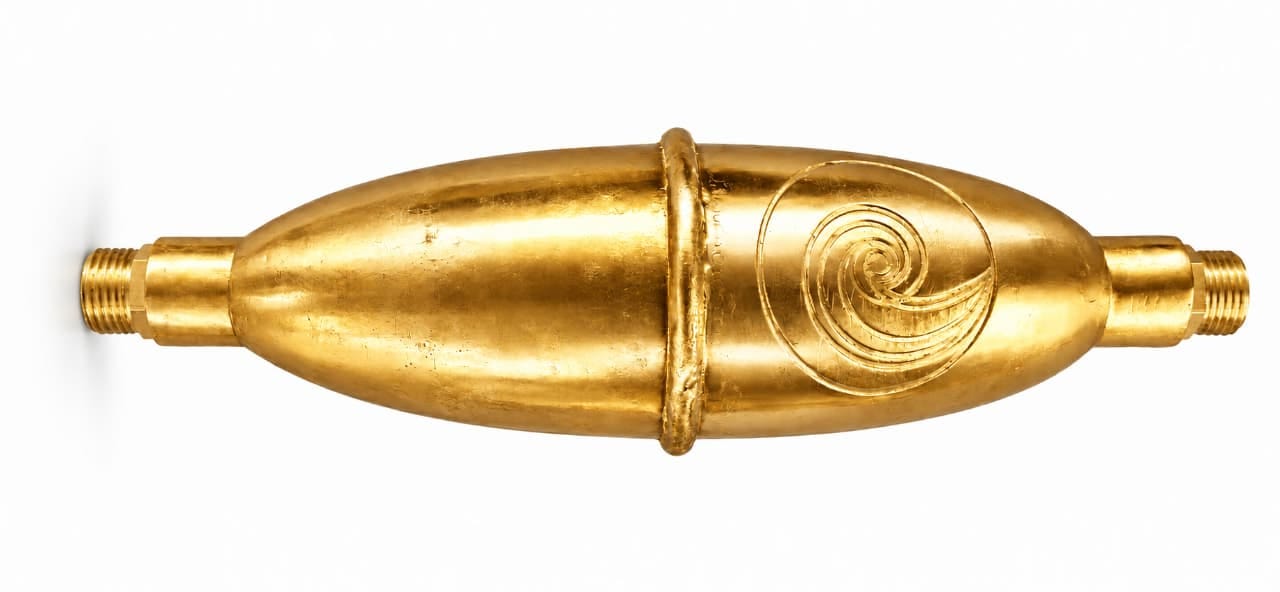
Gold-plated BioVortexer design
I have been trickling water through a water structuring tube made up of a series of glass marbles for about 2 years now, year-round in Vermont. The water collects in a plastic baby's swimming pool before running over the side and into the soil. The pool is about 3 feet across and 6 inches deep. The first summer I spotted a frog. this summer as many as six frogs can be seen sitting on a board that floats in the water. They appear to have moved in despite its small size. At least the frogs approve of structure water.
🐸
I think the article moves too quickly from observations about water near biological surfaces to claims about treated irrigation water.
The cited xylem study observed particle-exclusion zones around isolated plant vessels. That is interesting, but it did not test whether water passed through a vortex device retains a special structure, enters plant cells more readily, or improves crop yields. Likewise, evidence that aquaporins matter to plant growth does not establish that vortex-treated water passes through them faster.
The proposed icosahedral geometry, reduced cellular energy cost, and improved nutrient delivery are presented as explanations, yet the article acknowledges that the connecting measurements remain to be done. Given that, “We know it works” seems stronger than the evidence supports.
Could you point to an independently replicated, controlled trial of the BioVortexer that measures crop yield and water use, along with evidence that the claimed change in the water persists from the device to the roots? That would give readers a way to assess the practical claim separately from the proposed theory.