



“The ever-changing display of plant forms, which I have followed for so many years, awakens increasingly within me the notion: the plant forms which surround us were not all created at some given point in time and then locked into the given form; they have been given a felicitous mobility and plasticity that allows them to grow and adapt themselves to many different conditions in many different places.” — Johann Wolfgang von Goethe, Metamorphosis of Plants, 1790
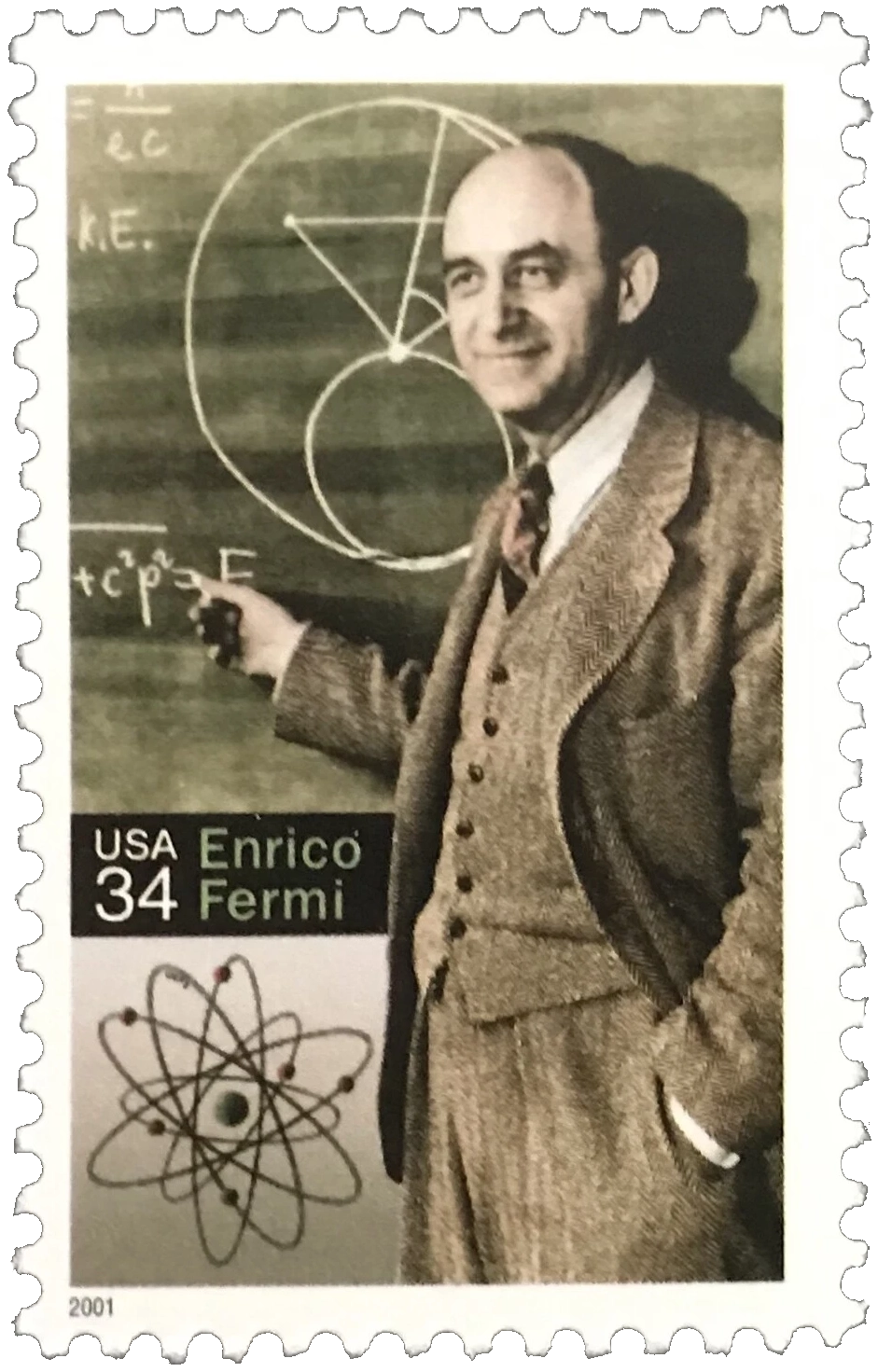
Enrico Fermi, surrounded by chalked equations and the proliferating names of new particles in the early 1950s, is reported to have said: “If I could remember all the names of these particles, I would have become a botanist.” It is usually taken as a joke about the proliferating taxonomy of high-energy physics. Take it more seriously. Fermi may have stumbled onto a structural intuition he lacked the conceptual framework to pursue: that the subsensible world of quantum events and the supersensible world of living metamorphosis are not merely superficially alike. They obey the same grammar. One performs that grammar below the threshold of life; the other performs it above.
The physicist counts shadows. That is not a criticism. Shadows are real and their measurement has proven consequential. But a world picture built entirely from the shadow side will always be haunted by what it cannot account for: the leap from chemistry to life, from physical organization to the directed formative activity that builds organisms. No amount of additional particle-naming closes that gap.
The Problem With Gradual
Standard biology teaches plant growth as a continuous process. The textbook diagrams show arrows, and the arrows suggest smooth progression from seed to seedling to adult to flower to fruit. Goethe’s Metamorphosis of Plants (1790) demonstrated that this picture is wrong at its root. Plant development proceeds through qualitatively distinct stages separated by leaps, contraction giving way to expansion and expansion pulling back to contraction, in a rhythm Goethe traced across six transformative stages. The vegetative leaf and the petal of the flower are the same organ, separated by a metamorphic discontinuity no accumulation of intermediate stages explains away.
Physics has known the equivalent since Bohr and Planck. Electrons do not slide between energy levels. They jump. The quantum between states is a qualitative discontinuity, not a small amount of something continuous. Between energy level n and energy level n+1 there is no n+0.5. The system is in one state, and then it is in another.
Both domains describe Nature moving in jumps. The question worth sitting with is whether this shared grammatical structure is coincidental, or whether it points toward something about the underlying architecture of reality, operating at two different scales, readable from two different directions.
The Mirror Principle
Rudolf Steiner, across lectures spanning three decades, articulated the concept of the subsensible as an inverted reflection of the supersensible. The atomic and sub-atomic forces are not simply smaller versions of ordinary physical phenomena. They are what remains when living formative forces are thrust downward through the floor of the physical world, appearing there as their own shadow: stripped of life-quality, operating in reverse polarity. Three forces, three inversions. Electricity is the Light Ether pushed sub-physically into the Luciferic realm. Magnetism is the Chemical/Sound Ether inverted into the Ahrimanic. The intra-nuclear binding forces, those that hold the nucleus in its concentrated, terrible integrity, are the deepest sub-natural reflection of the Life Ether, and their governing powers are neither Luciferic nor Ahrimanic but Asuric: a third and qualitatively distinct order of opposition. What presently passes for nuclear power does not engage these forces at all. It ruptures the nucleus, collects the waste heat, and boils water. It is a steam engine with a more violent heat source. Georg Unger, in Spiritual Science and the New Nature Forces (Steiner Book Centre, 1977), is careful to distinguish between this partial, anticipatory appearance and the full future manifestation of the Third Force, which, according to Steiner’s cultural-age chronology, remains portended rather than achieved. That distinction matters. What we have so far built tells us almost nothing about what is actually coming.
The directional quality of this inversion is the key to how the mirror works. Etheric forces originate from the cosmic periphery and work inward toward the organism, drawing the plant outward and upward to meet them: the leaf reaching toward light, the flower opening to the surrounding cosmos, the whole organism oriented toward what lies beyond its own boundary. The plant grows toward its formative source. In the sub-physical domain the same polarity of contraction and expansion is present, but stripped of all developmental direction and purposive sequence. Where the living plant moves through contraction and expansion as an ordered metamorphic arc from seed to seed, the sub-physical nucleus holds those same opposing tendencies in a static, irresolvable tension that produces no form and no metamorphosis. The mirror principle does not mean the sub-physical copies the supersensible in miniature. It means the same polarities are present in both registers, but below the physical threshold they are severed from time, from direction, and from any formative purpose. The full structural analysis of what the Standard Model calls its force taxonomy belongs to another discussion. What matters here is the orientation: the plant faces outward toward its source; the sub-physical implodes away from it.
We can see from this why particle physics multiplies names without arriving at life. It is observing the shadow cast by a reality it never directly faces. The living plant, properly observed, faces us with that reality directly. The Goethean investigator who learns to read the quantum mirror as a mirror will find both domains illuminated simultaneously.
The Collider and the Shadow-Zoo
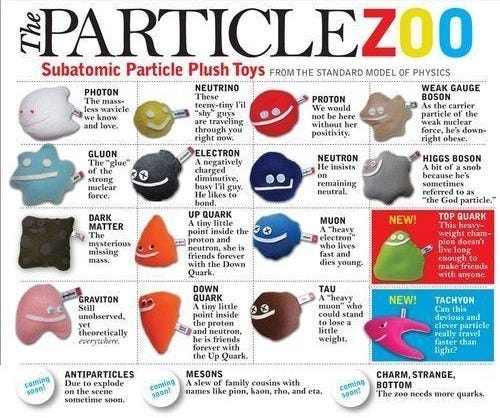
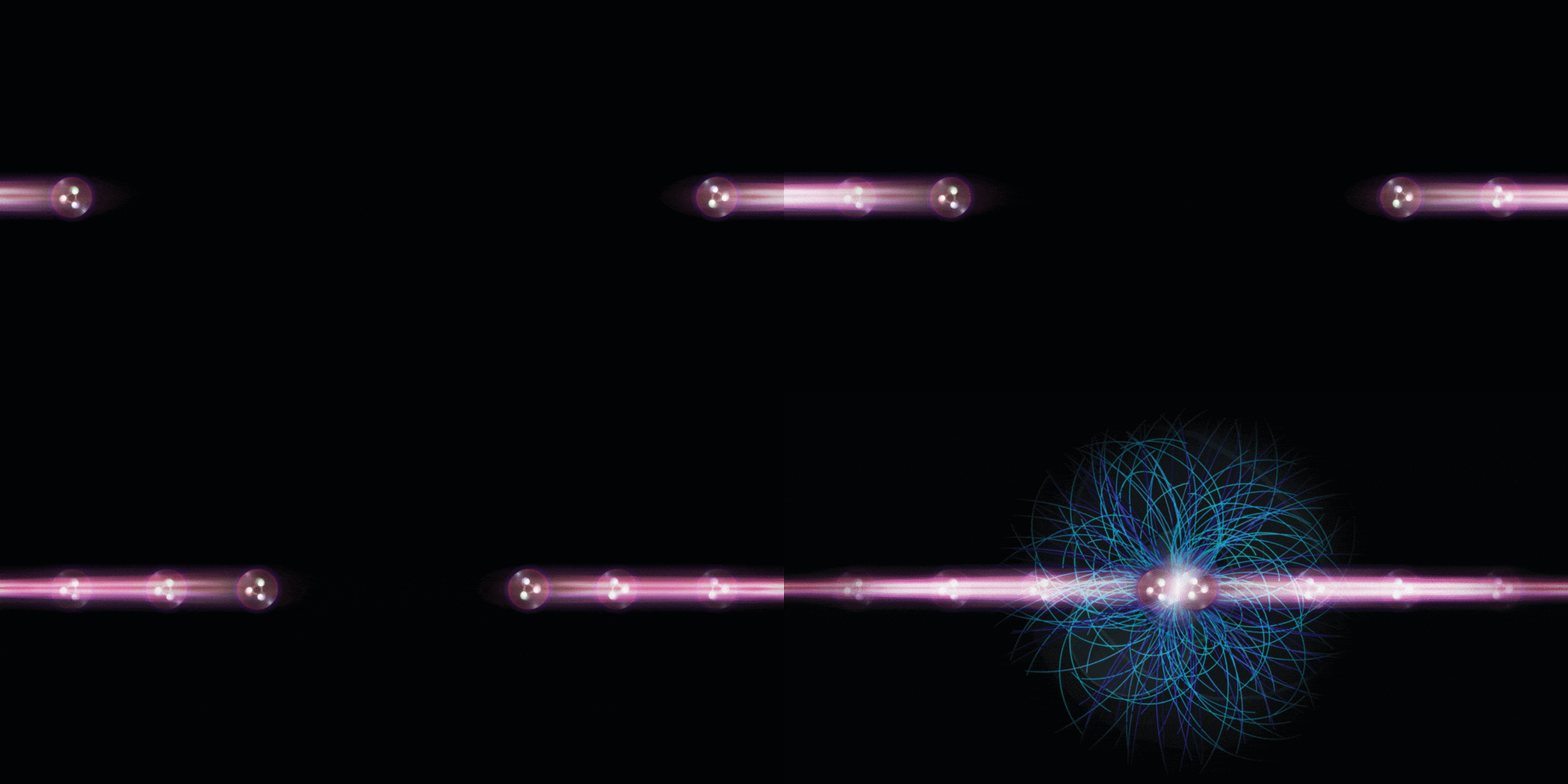
The particle accelerator deserves a moment’s consideration before the table, because it illustrates the mirror principle in its most concentrated form. What does a collider actually do? It accelerates charged particles to extreme velocities using vast electrical fields — sub-natural Luciferic forces in their most intensified technological expression — and then forces them into violent collision. The products of that collision are the famous “particle zoo”: hundreds of short-lived entities cascading outward from the impact, most of them existing for fractions of a second before decaying into something else.
Through the Steiner mirror, these products are not building blocks. They are fragments: the debris produced when etheric field-boundaries are shattered by sub-physical electrical energies of sufficient intensity. The accelerator does not reveal the constituents of matter in the way a jeweler reveals the facets of a gem. It shatters the form and catalogues the pieces. What Fermi was surrounded by — the proliferating names, the particle taxonomy that threatened to swamp him — was the inventory of a demolition site. This is why the names multiply without terminus, and why the Standard Model, for all its mathematical precision, produces no insight whatsoever into how a seed becomes a plant.
Five States, Two Registers
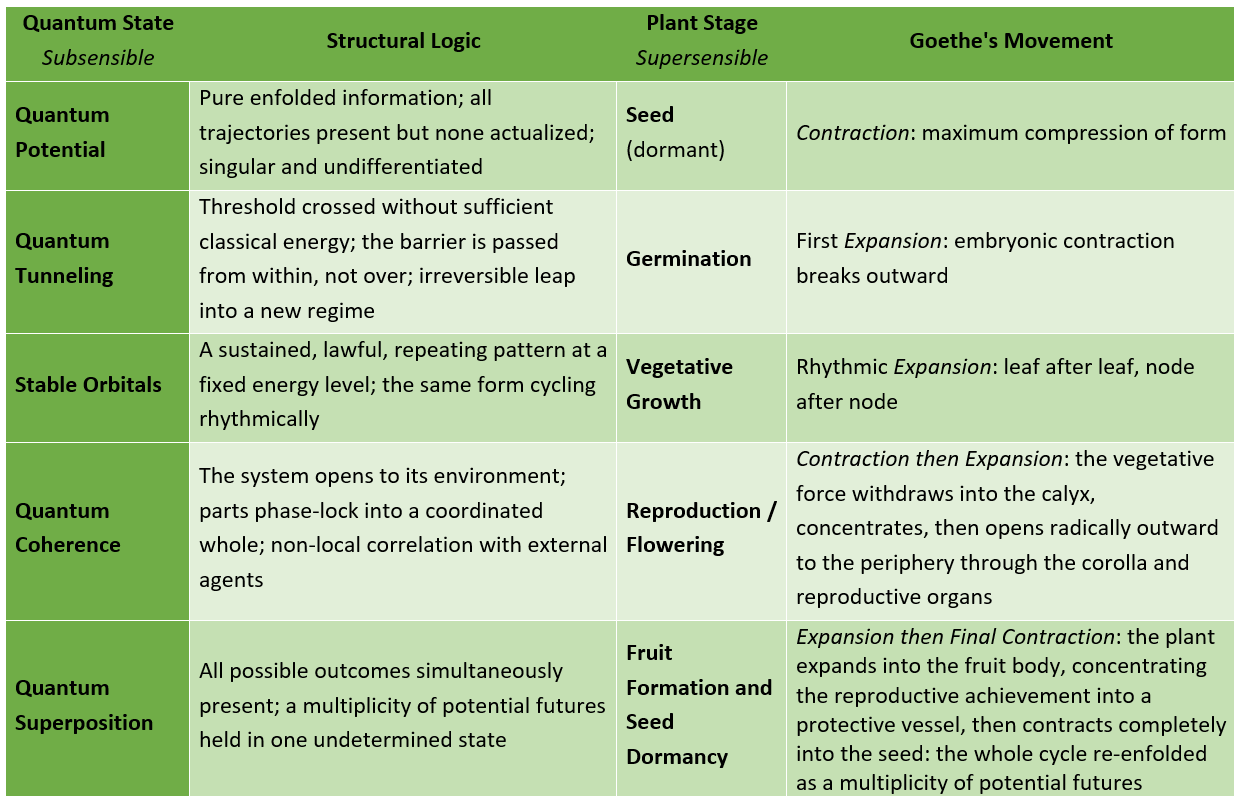
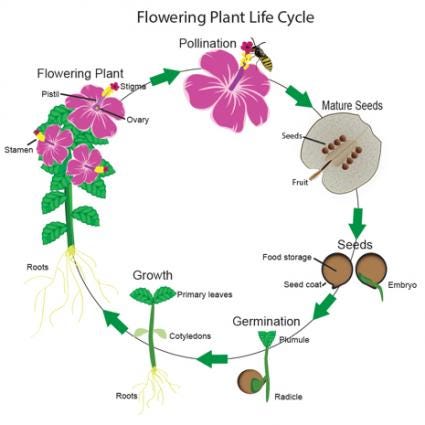
The five quantum phenomena that map most precisely onto Goethe’s metamorphic sequence are quantum potential, quantum tunneling, stable orbitals, quantum coherence, and quantum superposition. Each pairing rests on a specific structural identity, not loose resemblance. Goethe’s own morphological account runs through six transformations — cotyledon, stem leaf, calyx, petal, stamen/pistil, fruit-seed — and the table maps five quantum states to that arc, with the calyx-contraction and flowering-expansion compressed into the coherence row. That compression is a deliberate choice, not an oversight; a sixth phenomenon, quantum entanglement, presents itself as a natural extension of the framework and is addressed after the table. The table should be read as a working instrument, not a closed system.
Walking the Arc
Quantum Potential and the Dormant Seed
David Bohm, in Wholeness and the Implicate Order (Routledge, 1980), described quantum potential not as a force that pushes a particle but as information that guides it: an enfolded order in which all possible trajectories are present but none actualized. The dormant seed is precisely this. It is not a small plant awaiting expansion. It is a qualitatively different ontological state that contains the entire future plant as compressed, pre-expressive potential. Neither the wave function nor the seed yields to analysis of what they will become. Both are irreducible to what follows them. They are the thing that contains rather than the thing that expresses. Both operate by the inward, concentrating direction of sub-physical and etheric forces at their most contracted: the quantum potential as pure mathematical compression, the seed as biological compression so complete it mimics the inorganic.
Quantum Tunneling and Germination
In quantum tunneling, a particle crosses an energy barrier it has no classical right to cross, not by accumulating sufficient energy to go over it, but by passing through it, the wave function penetrating the barrier and reconstituting on the far side. The critical point, and the one most often missed: the particle’s energy after tunneling is identical to its energy before. Only the regime has changed. Germination follows exactly this structure. The seed does not gradually warm up until it has accumulated enough energy to force its growth. Given the convergence of moisture, temperature, and light, a qualitative threshold is crossed discontinuously. The dormant state is not overcome. It is passed through. The germinating seedling is not yet larger than the seed. It has simply crossed into an entirely new mode of being. Quantum biochemistry has identified tunneling as a genuine mechanism in enzyme catalysis and DNA replication — the living world uses this sub-physical grammar as a functional tool, which is itself a further confirmation that the two registers are not merely analogous but operationally entangled.
Stable Orbitals and Vegetative Growth
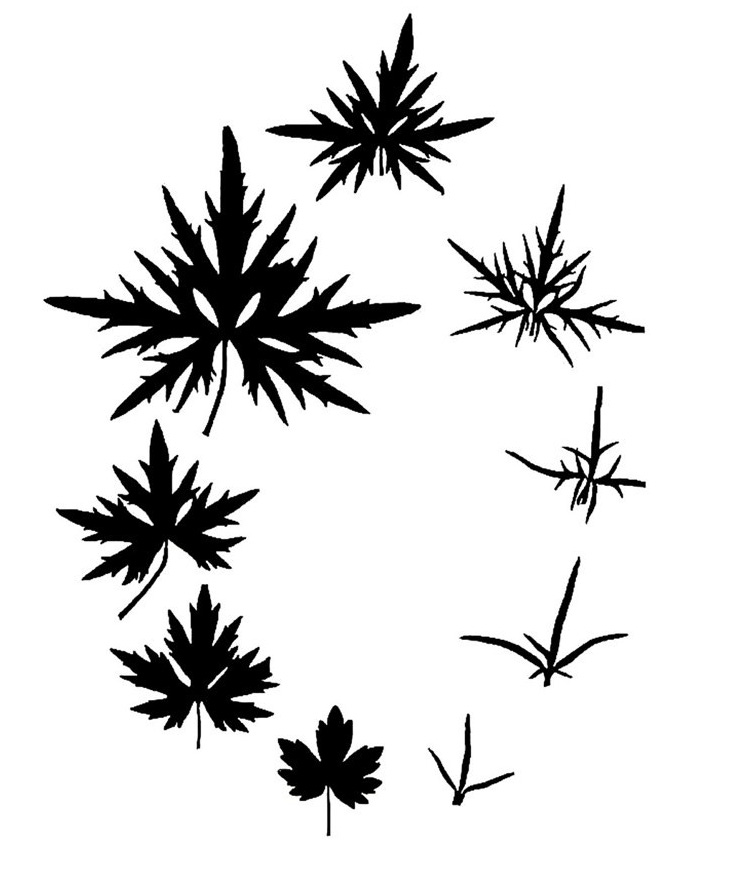
The stable orbital is a standing wave: a pattern sustaining itself rhythmically at a fixed energy level, self-similar, neither ascending nor collapsing. And yet electrons within that stable orbital do move through discrete sub-states, shifting configuration while remaining within the same energy register. Vegetative growth in Goethe’s account works precisely this way. The meristem produces leaf after leaf, node after internode after node, and each leaf is not simply a larger copy of the one below it. The form shifts with each iteration: from the simple cotyledon through progressively more elaborate expressions, expanding toward maximum complexity before beginning the quiet simplification that signals the calyx approaching. Each leaf is a discrete formal step, the archetypal organ expressing itself at a distinct point in the sequence. Goethe described the leaf as “the true Proteus who can hide or reveal himself in all vegetal forms,” and during the vegetative stage Proteus is doing exactly that: stepping through a series of distinct guises within a sustained, lawful rhythm, never breaking the register but never simply repeating either. The standing wave holds its level while the electron moves through its orbital sub-states; the vegetative stage holds its register while the leaf moves through its metamorphic sequence. The overall stability and the internal discreteness are not in contradiction. They are the same principle, operating simultaneously at two scales.
Quantum Coherence and the Flowering Stage
Quantum coherence describes the condition in which parts of a system that were operating independently become phase-locked into a unified, relational whole, with correlations extending non-locally across the system and between the system and its environment. But coherence does not simply arrive. In quantum systems, the phase-locking is preceded by a withdrawal of the system into itself, a concentration before the opening. The plant makes this visible. The vegetative expansion does not flow directly into the flower. It first pulls back, contracting the leaf-force into the calyx: tight, concentrated, a gathering of everything the vegetative rhythm has built. Only from that concentrated state does the flowering open radically outward to the periphery. The transition from vegetative growth to flowering is not a quantitative increase in leaf production. It is a qualitative withdrawal followed by a qualitative opening, the systole before the diastole, the inbreath before the outbreath. The flower is the plant’s coherent field state, the interface between the plant’s inner formative history and the cosmic forces of light, warmth, pollinator behavior, and atmospheric chemistry. The bee arriving at the flower is not a visitor from outside the system. During coherence, the bee and the flower are temporarily one system, phase-locked in mutual information exchange. Gregory Engel at the University of Chicago published evidence in 2007 that photosynthetic complexes in green plants maintain quantum coherence in energy transfer at biological temperatures, a result that has since opened a more complex interpretive landscape: Cao and colleagues, writing in Science (2020), suggest the observed coherence may involve vibrational-electronic coupling rather than purely quantum coherence in the conventional sense. The full interpretation remains genuinely live, which is itself significant. It means that physicists, using sub-physical instruments, are reaching the boundary of what the subsensible register can resolve about living systems. The living plant is outrunning the measurement.
Quantum Superposition and Fruit Formation and Seed Dormancy
The full arc completes itself here with a philosophical elegance that only becomes visible when the framework is developed in sequence. The initial seed was quantum potential: singular, undifferentiated, one enfolded form. The fruiting stage first expands the plant’s reproductive achievement outward into the fruit body, a visible superposition of all possible seeds held within one vessel. Then the final contraction: dozens or hundreds of seeds produced at the plant’s reproductive culmination, each one quantum superposition made physical — all possible futures simultaneously present, each seed a different collapse-event waiting to occur. Which seed lands in which soil under which conditions remains entirely open. The wave function has not collapsed. The plant has moved from one singular potential to a multiplicity of simultaneous possibilities. Goethe described the final contraction from fruit into seed as the completion of an ascending spiral, the same form as the beginning but now carrying the whole developmental arc as its invisible content. Bohm would have recognized the structure immediately: the implicate order re-enfolds the explicate order, and the cycle recommences.
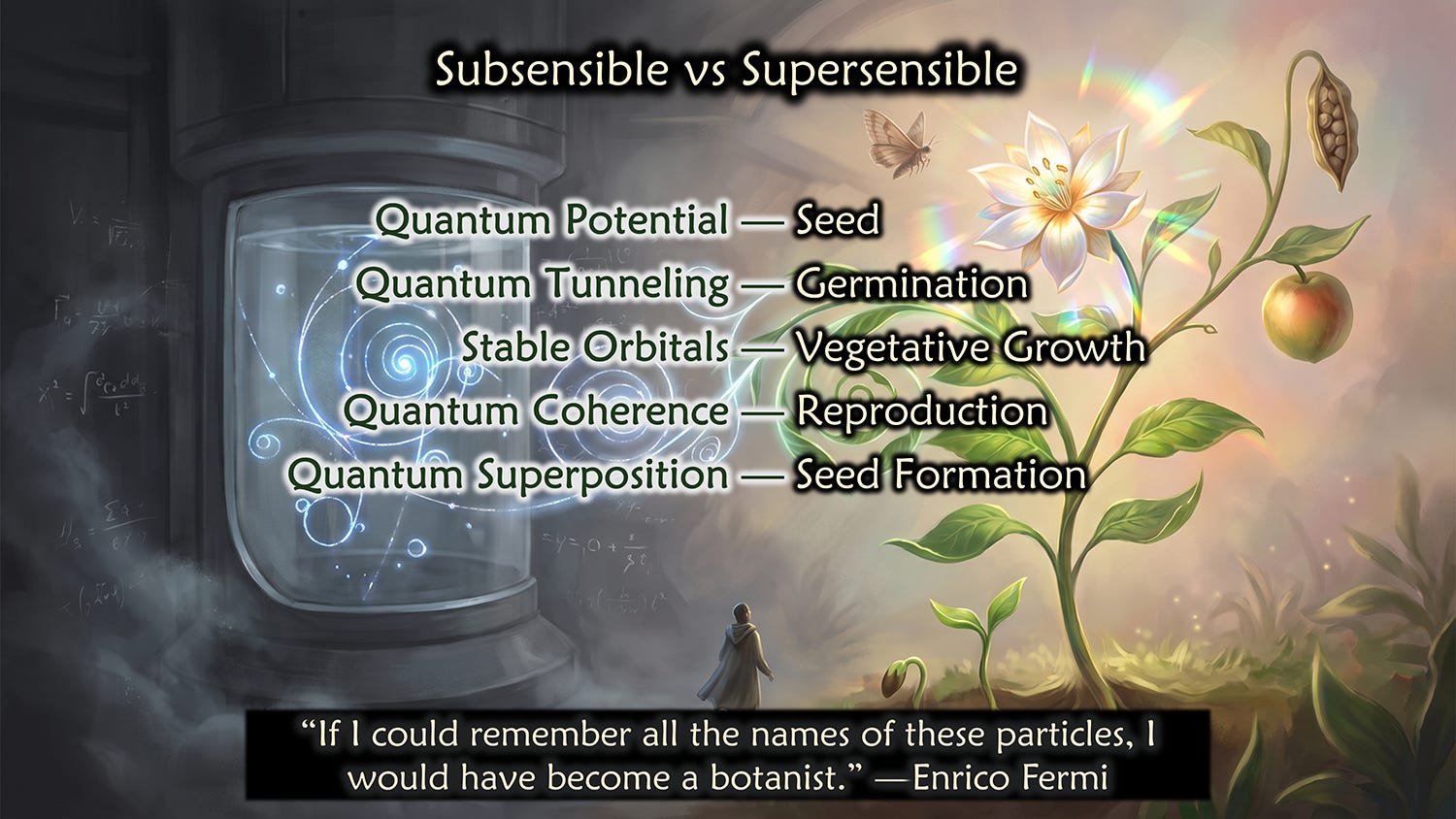
The five-stage sequence, stated as pure structural movement, reads identically in both registers.
Singular potential. Threshold leap. Sustained rhythm. Coherent opening. Multiple potential.
A Note on Entanglement
The reader familiar with quantum mechanics will have noticed the absence of quantum entanglement from the table. Its omission is deliberate rather than accidental, and naming the reason is worthwhile.
Entanglement is the non-local correlation between particles that persists across arbitrary distances, such that a measurement on one instantaneously determines the state of the other regardless of separation. It does have a supersensible analog. The etheric body of a living organism maintains coherent form-identity across spatial separation and developmental time: the root and the flower of the same plant are in a continuous, non-locally coordinated relationship that no purely chemical or mechanical signal accounts for. Rupert Sheldrake’s morphogenetic field research is attempting to describe precisely this non-local formative coherence operating above the physical threshold.
Entanglement is absent from the five-stage table because the table maps to Goethe’s sequential metamorphic stages, a temporal arc from seed to seed, and entanglement is not a stage but a standing condition of the living organism throughout its development. It is the background field within which the five stages unfold, not one of the stages themselves. Think of it as the quantum description of what Steiner called the etheric body as such: the non-local, time-binding, form-coherent field that makes the sequential metamorphosis possible in the first place. A fuller treatment would place entanglement in a separate row below the table, labeled not as Stage 6 but as the ground condition underlying all five stages simultaneously.
The Shadow Side of Life
The physicist’s world picture is built on the subsensible register of this grammar. Particle accelerators, bubble chambers, spectroscopes: all of these instruments are extremely sensitive detectors of the shadow side of formative reality. They read the inverse. What they record as quantum potential, tunneling, orbital standing waves, coherence, and superposition are the sub-physical impressions left by etheric formative forces operating above the physical threshold in the living world. The forces that build the plant are prior. The quantum phenomena are their reflection in a lower register.
Steiner’s interpretive paraphrase in the Leading Thoughts, that the human being who descends into sub-nature through technological mastery must compensate by ascending an equal distance into supersensible knowledge, was not a moral admonition. It was a structural observation. A world picture anchored exclusively in the subsensible is a world picture built on inversions, and the thinking that emerges from it inherits the inverted character of what it studies. The physicist who spends a career in the sub-natural domain without a counterbalancing development of Goethean perception ends up genuinely unable to read the living world. The proliferating names of particles are the symptom.
The corrective is not sentiment about Nature. It is precision about the supersensible.
The Soul’s Eye and the Urpflanze
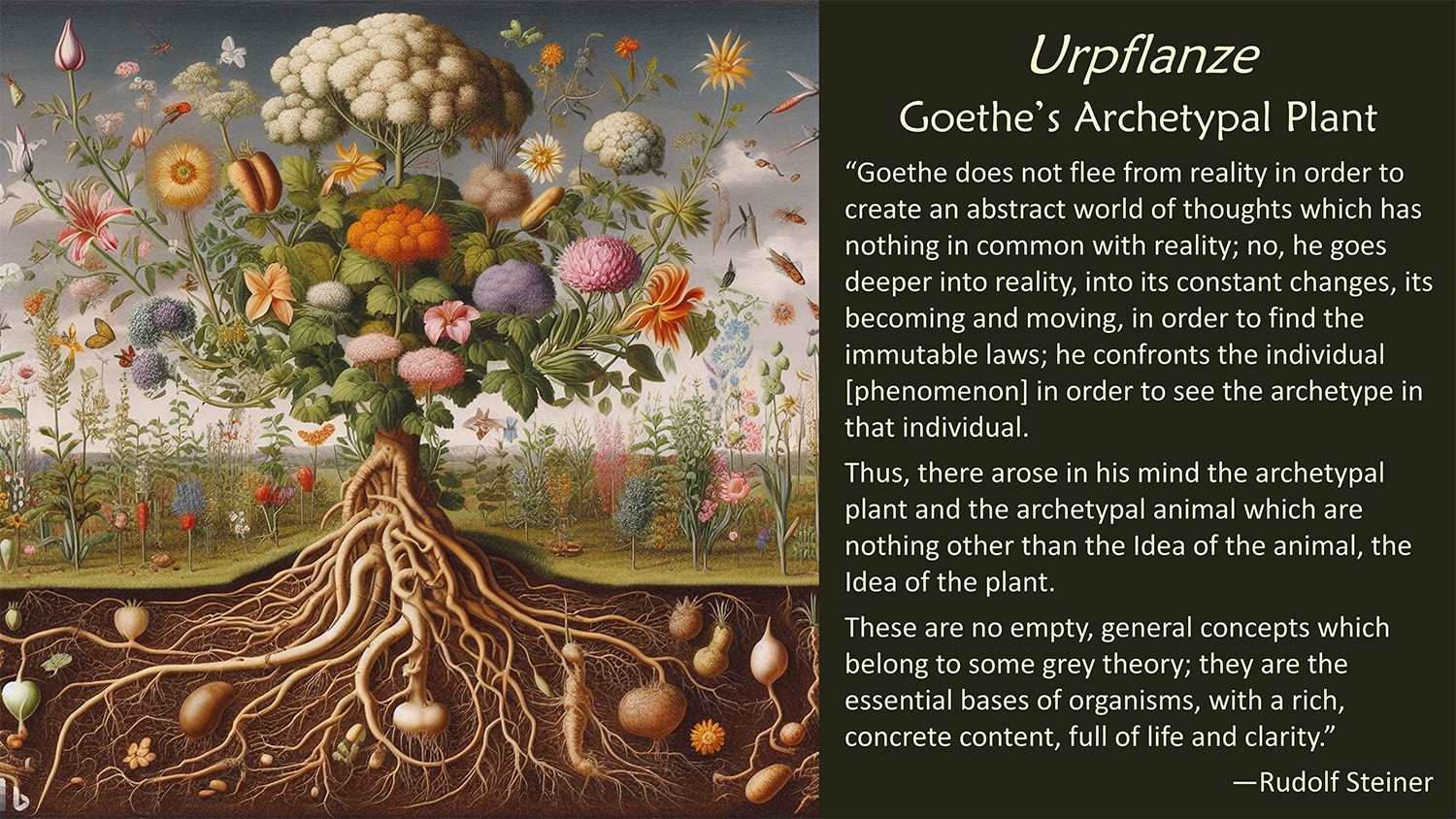
In The Soul’s Eye Opens (Chronicles of Alkemix, 2026), the development of Imagination as a genuine cognitive organ is traced through its Steinerian context: the capacity to perceive dynamic form extended in time rather than static form arrested in space, to hold metamorphosis as a single living image rather than a sequence of snapshots. Goethe called the object of this perception the Urpflanze — the archetypal plant — and he was explicit that it was not a theoretical construct but a percept, accessible to anyone who developed the appropriate cognitive instrument.
The Soul’s Eye Opens

“The human being is the organ through which the universe knows itself.” — Johann Wolfgang von Goethe
What stands before us in the quantum-plant framework is precisely the Urpflanze seen from two directions simultaneously. The Urpflanze is the archetype of etheric formation into the living plant world: the formative law that moves through every individual plant, expressing itself differently at each metamorphic stage while remaining a single, continuous act of creation. The quantum sequence is its shadow, cast downward through the physical threshold into the sub-natural realm where physicists can measure it with instruments but cannot, from within that measurement, recover the living reality that casts it.
Goethe’s participatory process of observation, which he called exakte sinnliche Phantasie (exact sensorial imagination), is the method by which the soul’s eye is trained to see the Urpflanze directly. The observer does not stand apart from the plant and record it. The observer re-enacts the metamorphic sequence inwardly, allowing the developmental logic to reorganize their own thinking from within. The quantum-plant table above is a scaffold for exactly this process. It gives the analytically trained mind a structural map precise enough to trust, pointing toward a living image that transcends the map entirely once it is genuinely inhabited.
Building the Image
What follows is offered as practice instruction, not analytical description. The shift it requires is from reading about the metamorphic arc to inhabiting it. Set aside the analytical stance for a moment and allow the sequence to become something you move through rather than something you observe.
Begin with the dormant seed. Hold it in the inner field of attention and resist the immediate impulse to imagine it germinating. Stay with the state of pure enfolded potential: the whole plant present as compressed intentionality, nothing expressed, everything available. Maximum contraction. The physicist would consider it as the wave function before any measurement, all trajectories superposed, nothing yet collapsed.
Now attend to the threshold-crossing. Not the plant gradually gaining energy, not a smooth warming-up. The tunneling: the discontinuous passage from one regime into another, the barrier passed from within rather than overcome from without. The seed does not push outward with accumulated force. Something opens that was closed, and what was enfolded begins to express. The quality of that discontinuity deserves careful attention. It is not the turning up of a dimmer switch. It is the opening of a door that was not previously a door.
Then the vegetative rhythm: leaf after leaf after leaf, the standing wave pulsing in stable repetition up the stem. But look more carefully. Each leaf from the cotyledon upward is not simply a larger version of the one below it. The form shifts with each iteration: the cotyledon gives way to the first stem leaf, which gives way to a progressively simplified form moving toward the calyx. Each leaf is a discrete expression of the same archetypal organ at a different level of the sequence. Thinking along these lines, the leaf progression is a visible enactment of electrons moving through successive orbitals: the same underlying form, but stepping through qualitatively distinct states with each iteration, the whole sequence directional and lawful. Goethe spent extended time with this stage, returning to the same plant on successive days, watching precisely this movement: the subtle but real qualitative shift from leaf to leaf, the way the form is both continuous and discretely stepped, held within a stable overall rhythm before the contraction into the calyx arrives and the whole register changes.
Then the coherent opening: the plant becomes relational, peripheral, no longer self-enclosed. The flower is the plant’s coherent field state, the moment at which the organism’s inner formative history and the forces of the cosmic periphery meet and synchronize. This is the furthest point from the seed’s compression, the widest expansion, the moment at which the boundary between the plant and its world becomes genuinely permeable.
And then the return. The re-enfolding into seed. The initial seed was quantum potential: singular, one possibility. The final seed-set is quantum superposition: multiple futures held simultaneously, each one a complete potential cycle awaiting its conditions. The spiral has completed one turn and risen. The same form as the beginning, carrying the whole developmental arc as its invisible content.
This sequence, held as a living inner image rather than a string of propositions, is the beginning of Imagination in the Steinerian sense. It is not a thought about the plant. It is thinking in the way the plant develops. And once that image is genuinely alive in the mind, the physicist’s particle tracks, the electron’s quantum jumps, the wave function’s probabilistic unfolding: all of these become readable as the shadow-side of something the living plant is doing in plain sight, in any garden, in any season, without waiting for an accelerator to be switched on.
The question, once the image is built, is simply which side of the mirror you choose to call primary. Richard Feynman once declared that “science is the belief in the ignorance of experts.” He meant it as a defense of open inquiry against institutional dogma, and in that spirit it is well taken. But there is a further step available: the recognition that the experts whose ignorance most urgently requires examination are those who have built their entire epistemology on the shadow side of reality, and who have therefore never directly faced the thing that casts the shadow. The plant in your garden is doing that thing, continuously, without instruments, without funding, and without the slightest concern for the Standard Model.
“Science is the belief in the ignorance of experts.” —Richard Feynman
If this work enlivens your soul, the most direct way to support its development is a paid subscription here on Substack, or a contribution via PayPal at paypal.me/alkemix33. The workshops on Archetypal Vision and Sacred Geometry of Water take these capacities from map into living practice, with details at Lux.Alkemix.Art. And if you know someone for whom this kind of thinking is genuinely nourishing, passing it along costs nothing and matters more than most people realize. Thank you.

I appreciate this attempt to think about Goethean morphology and modern physics alongside one another. These sorts of exercises are always interesting and I've done a couple myself. The refusal to let life get summed up by chemistry is always most welcome, and the claim that the living world is primary while "physics" deals in shadows is one I share.
I do think this piece ends up granting the word "quantum" far too much ontological authority. From a stricter field-theory standpoint, "quantum" names a quantity. It is a measure, a parceling of action or energy for mathematical treatment, a calculatory grammar and nothing more. There is nothing in nature you can point to and call quantum, the same way there is nothing in a rock you can point to and call it its "weight". That number is a descriptor stuck on from outside. Take the rock to deep space and it is gone. The atomists (truly mathematicians and not physicists) made a religion of these descriptors because they cannot abide anything they can't tally. A hammer sees nails. A mathematician sees particles.
So treating tunneling, superposition, coherence, orbitals, and potential as if they were formative principles in Nature (or even analogous to such) repeats the very error the piece seems to be trying to overcome. The physicist quantifies field phenomena, and then the metaphysician spiritualizes those quantified abstractions. The post called the particle zoo demolition debris in one paragraph, correctly, and then laid that same inventory against the Urpflanze in the next. This is straight up diabolical.
The Goethean sequence does not need the rescue. Seed, leaf, calyx, flower, fruit, seed is a directly perceptible arc of contraction, expansion, rhythm, and return standing on its own. The analogy to quantum mechanics weakens it, because it translates living metamorphosis back into the language of the mathematical atomism we should be eradicating.
The most catastrophic bit, on the flowering stage, rests on the bugbear of the photon. All of it assumes light is a little packet hopping from site to site. The photon is an arbitrary abstraction. Tesla said so plainly. Light is a sound wave in the ether, a compound coaxial circuit of rarefactions and compressions along the dielectric, and the so-called speed of light is the hysteresis of the medium.
"Physics" continues mistaking successful prediction for explanation. "Quantum potential" and "coherence" describe a measurable (whatever that really means) behavior while leaving the actual force, field, or formative principle completely unnamed. This piece ends up critiquing the Standard Model while still borrowing its prestige vocabulary to do that same critiquing. To me, these matters should not be a "keep your enemies closer" situation.
The post notes that electricity is the Light Ether pushed sub-physically, that magnetism is the inverted Chemical Ether. That is field language, Steiner's language, and that of the men who actually understood the field. Steinmetz, Heaviside, Russell, Dollard, who all treated quantum theory as a travesty of how nature actually works. J.J. Thomson called his own electron one unit of dielectric induction and left it at that. A more radical Goethean critique would begin exactly there, from formative fields, etheric polarity, motion, tension, expansion, contraction, and phase. It would treat "quantum" as a bookkeeping term applied to effects within field modalities and refuse to let it stand as anything that might be confused as a hidden key to Nature's inner grammar.
The plant in your garden reveals how impoverished the quantum vocabulary becomes the moment it tries to speak about life. When the door is standing open, we must refuse to walk back through it to the likes of Bohr and Feynman to bless the supersensible.
I think you're making a profoundly important discovery here, Thomas.
What if the phenomena of the quantum world are reflections of the phenomena of life itself? In much the same way that the physical forces we observe might be reflections of the Ahrimanic, Luciferic, or Asuric forces at work within human existence.
I realize this is a complex picture, perhaps almost impossible to grasp in a short comment. I only say this because I spent eight years studying quantum physics at university before I felt I could begin to understand it. Later, while my children attended a Waldorf school, I joined reading circles where we explored Rudolf Steiner's works together.
So let me offer you another perspective, Thomas. I'd love to hear what you think.
What if quantum phenomena, the plant world, and the influences of Ahriman and Lucifer are not external realities at all—but all exist within us?
What if nothing is truly outside us?
The plant I see appears within my mind, experienced by the witness that lives within me. In that sense, I am not directly experiencing the plant itself, but my own mind.
And by the same token, when we speak about quantum physics, could it be that we are actually speaking about the thoughts arising within our own minds?
What if this was precisely what Fermi was pointing toward all those years ago?